
 By admin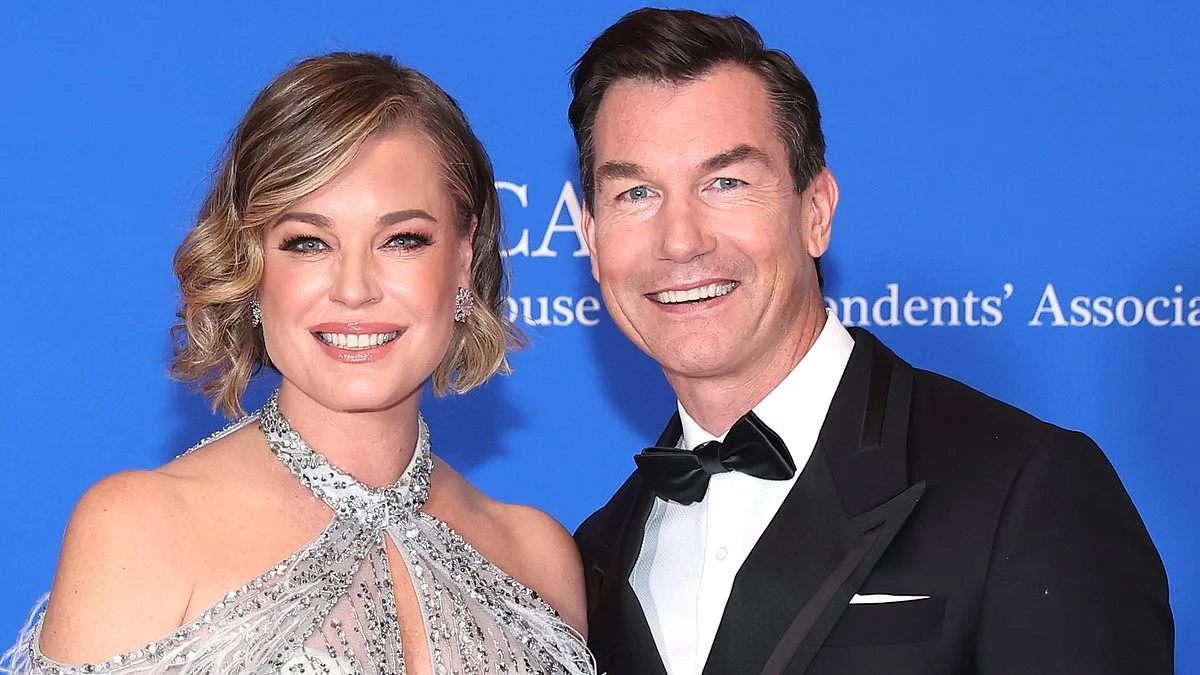
Actor and television host Jerry O’Connell has provided a candid look into the internal dynamics of his household following the 2024 United States presidential election, revealing that his political observations led to a "physical" confrontation with his wife, Rebecca Romijn, and their teenage daughters. Speaking on a recent episode of the Club Random podcast hosted by Bill Maher, the 52-year-old performer described the intense emotional atmosphere within his California home as the election results favored Donald Trump, leading to a sharp disagreement over the strategy employed by the Democratic Party and the candidacy of Vice President Kamala Harris.
The revelation offers a glimpse into the heightened political sensitivities currently permeating American domestic life, even within families that share a generally unified ideological front. O’Connell, a frequent presence on daytime television, explained that his attempt to provide a post-mortem analysis of the Democratic campaign was met with immediate and visceral resistance from his family members, highlighting the deep-seated passions surrounding the 2024 political cycle.
The Club Random Disclosure and Domestic Political Discord
During his conversation with Maher, O’Connell recounted the evening of the election returns, noting that he was in a state of "shock" as the electoral map began to shift in favor of the Republican ticket. O’Connell admitted that he began "spitballing" theories regarding why the Democratic platform was failing to resonate in the way he had anticipated.
"I said something along the lines of: ‘There was no planning. This is what they get. There should’ve been a primary,’" O’Connell told Maher. He elaborated that his critique was aimed at the internal mechanics of the Democratic National Committee (DNC) and the decision-making process that led to Kamala Harris becoming the nominee without a traditional primary contest following President Joe Biden’s withdrawal from the race.
The reaction from his wife, actress Rebecca Romijn, and their 17-year-old twin daughters, Charlie and Dolly, was instantaneous. O’Connell described the scene as one of sudden "rage." He claimed that without saying a word, his family members became "physical" with him, an expression he used to convey the intensity of their anger rather than implying a harmful altercation.
"My wife and daughters, without saying anything, became physical with me. They were filled with rage," O’Connell confessed. He noted that as a man living in a household with "not one, not two, but three people" who are deeply invested in the political outcome, he has learned that he must be exceptionally "careful" with how he voices his opinions or attempts to inject humor into sensitive topics.
Contextualizing the 2024 Election and the California Perspective
O’Connell’s surprise at the election results is a sentiment he attributed largely to his environment. Residing in California, a traditional Democratic stronghold, the actor noted that the prevailing sentiment in his social and professional circles did not align with the national trend that ultimately unfolded on election night.
"I didn’t think Trump was gonna win. I live in California. I didn’t think he was gonna win from what I was hearing," O’Connell remarked. This disconnect between regional expectations and national reality was a central theme of the 2024 cycle, where polling data and cultural bubbles often created divergent narratives.
The O’Connell-Romijn family were not merely passive observers of the campaign. Records and public appearances confirm that the couple were active supporters of the Harris-Walz ticket. They had previously donated to the Harris campaign and attended high-profile events, including a rally featuring a performance by Megan Thee Stallion. This active participation underscores why O’Connell’s critique—which suggested a failure in the very campaign they supported—was met with such hostility by his family.
The debate over whether the Democratic Party should have held a competitive primary following Biden’s exit was a significant point of contention among political analysts throughout the summer of 2024. Proponents of the "open primary" model argued it would have battle-tested the candidate, while the DNC opted for a swift consolidation around Harris to ensure party unity and legal access to campaign funds. O’Connell’s comments touched upon this specific intra-party tension, which evidently remains a sensitive subject within his own home.
The Resolution of a Long-Standing Celebrity Feud
In addition to his domestic anecdotes, O’Connell used the platform to confirm the formal end of a decades-long tension between himself and John Stamos, the first husband of Rebecca Romijn. The history between the three individuals has been a fixture of tabloid interest since Romijn and Stamos divorced in 2005.
Stamos and Romijn married in 1998 during the height of their respective careers. However, by the mid-2000s, the relationship had fractured. While Romijn met O’Connell shortly before the divorce was finalized, O’Connell has consistently maintained that no "shenanigans" or infidelity occurred. Nevertheless, the transition was publicly awkward, and a cold war of sorts persisted between the two actors for nearly twenty years.
The friction was reignited in 2023 with the release of Stamos’s memoir, If You Would Have Told Me. In the book, Stamos offered a "raw" and often critical depiction of his marriage to Romijn. He described feeling "emasculated" as her career as a film star (notably in the X-Men franchise) ascended while his own career experienced a perceived decline. Stamos wrote candidly about his resentment during that period, admitting he "hated" her at the time of their split and viewed her through a villainous lens.
Romijn expressed that she was "blindsided" and "incredibly shocked" by the revelations in the memoir, stating she had no interest in helping Stamos sell books by engaging in a public war of words. O’Connell initially defended his wife by mocking the book’s necessity, suggesting that "people gotta make a living."
The Howie Mandel Birthday Summit
The ice finally broke in November 2024 at a 70th birthday celebration for comedian Howie Mandel. The event, attended by a wide array of Hollywood figures, provided the setting for O’Connell and Stamos to finally move past their grievances.
O’Connell signaled the end of the feud by posting a selfie to Instagram featuring himself, Stamos, and Stamos’s current wife, Caitlin McHugh. In a caption that leaned into current geopolitical events, O’Connell joked: "First @zohrankmamdani and @realdonaldtrump Then me and @johnstamos You are up @russian_kremlin & zelenskyy_official."
The public reconciliation is seen by industry observers as a pragmatic move to lower the temperature on a narrative that had become increasingly focused on decades-old resentment. For Stamos, the memoir allowed for a public catharsis; for O’Connell and Romijn, the reconciliation allows them to distance themselves from the "villain" narrative presented in Stamos’s writing.
Analysis of Implications: Politics, Celebrity, and the Modern Family
The intersection of O’Connell’s domestic political strife and his professional reconciliation with Stamos illustrates a broader trend in the modern celebrity landscape: the blurring of lines between private conviction and public persona.
-
The Polarization of the Domestic Sphere: O’Connell’s experience reflects national data suggesting that political polarization is no longer confined to the ballot box but is actively reshaping family dynamics. According to various sociological studies conducted during the 2024 cycle, a significant percentage of Americans reported that political disagreements have caused strain within their immediate families. O’Connell’s story, while told with a lighthearted tone on a podcast, highlights the "rage" that can be triggered when political expectations are thwarted.
-
The "California Bubble" Phenomenon: The actor’s admission that he did not foresee a Trump victory due to his geographic location underscores the challenge of political forecasting in a divided country. For public figures in major metropolitan hubs, the cultural consensus often masks the shifting tides in battleground states, leading to the "shock" O’Connell described.
-
The Lifecycle of Celebrity Feuds: The resolution of the Stamos-O’Connell conflict suggests a shift toward "brand rehabilitation." In the digital age, long-standing feuds can become liabilities, often overshadowing current projects. By "burying the hatchet," both parties can redirect the media narrative toward their present work—such as O’Connell’s role on The Talk and Stamos’s continued success in television and music.
-
Gender Dynamics and the Memoir Trend: Stamos’s admission of feeling "emasculated" by his wife’s success remains a poignant example of the changing gender roles in Hollywood. His memoir contributed to a growing genre of celebrity tell-alls that prioritize emotional vulnerability over traditional PR-managed images. Romijn’s "blindsided" reaction highlights the risks associated with this trend, where one party’s "truth" can negatively impact another’s public standing without prior consultation.
As Jerry O’Connell navigates the aftermath of the 2024 election within his home and enjoys a newfound peace with his wife’s predecessor, his public disclosures serve as a case study in the complexities of modern life. Whether dealing with the fallout of a national election or the lingering shadows of a 20-year-old divorce, the actor’s experiences reflect the ongoing negotiation of personal values, public image, and family peace in an increasingly volatile cultural climate.
