
 By admin
The iconic shores of Loch Lomond, immortalized in the wistful 18th-century folk ballad "The Bonnie Banks o’ Loch Lomond," have long captivated imaginations worldwide. This expansive body of water, Scotland’s largest by surface area and arguably one of its most romantic, draws millions of travelers annually, often as a scenic backdrop glimpsed from the A82 highway en route to the deeper Highlands. For many, a stop in Luss, the picturesque conservation village on the loch’s western shore, has historically been limited to a brief pier stroll or an ice cream before resuming their journey. However, a significant transformation in the heart of Luss is redefining the visitor experience, aiming to immerse guests in the rich tapestry of Scottish history and local culture.
Revitalizing a Scottish Landmark: The Loch Lomond Arms Reopens

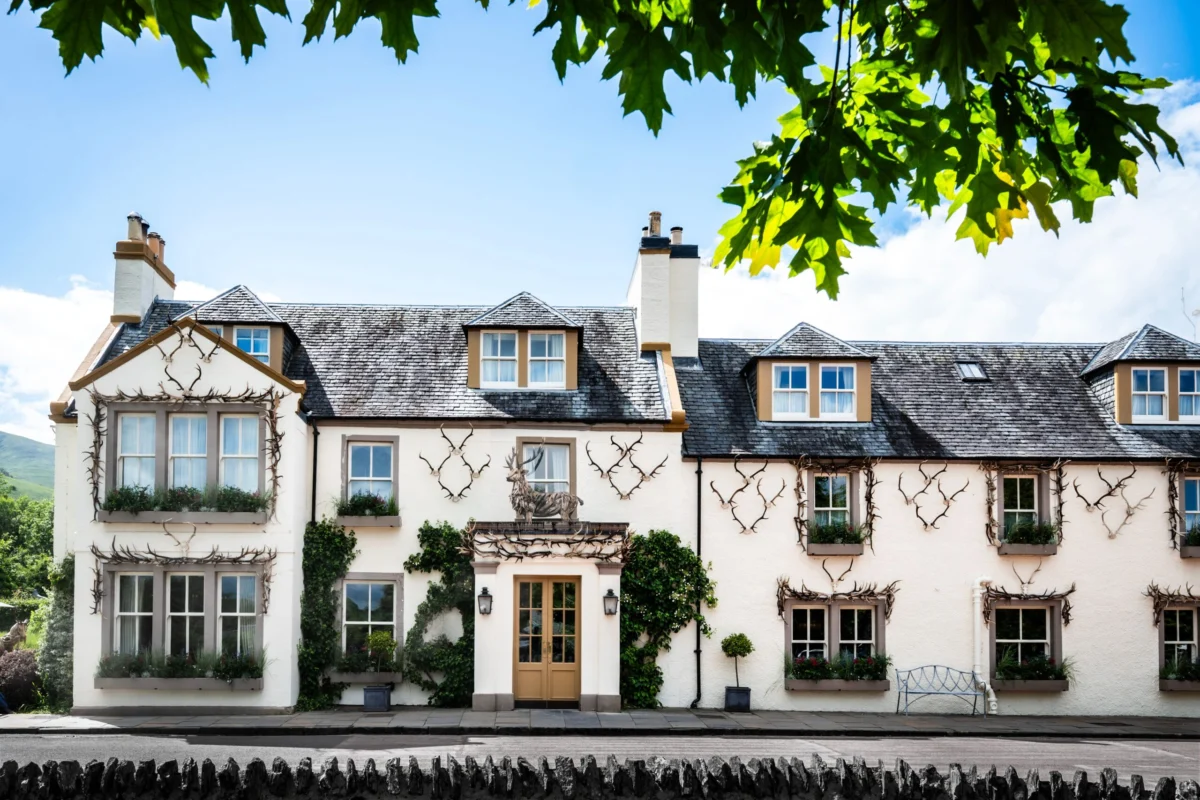
In a move set to enhance Luss’s appeal as a destination rather than a fleeting stopover, the historic Loch Lomond Arms has recently reopened following an extensive six-month renovation. This 17th-century former coaching inn, a cherished local institution within the village’s small community of approximately 120 residents, has been reborn as one of Scotland’s most distinctive new accommodations. Its reopening coincides with a broader trend in Scottish tourism, which has seen a growing demand for authentic, character-rich experiences that connect visitors deeply with the country’s heritage and landscapes.
Luss, with its climbing rose-covered sandstone cottages and slate roofs, already possesses an undeniable charm. On a recent sunny weekend in late summer, the village bustled with hikers and day-trippers, a testament to its enduring appeal. The steady stream of curious locals observed entering the Loch Lomond Arms, with its distinctive antler-crowned yellow door, underscored the community’s anticipation for this new chapter. The project aligns with national tourism strategies aimed at promoting sustainable and immersive travel experiences within Scotland’s national parks, such as Loch Lomond & The Trossachs, which attracts over 4 million visitors annually.
A Vision Rooted in Centuries of Stewardship

The ambitious reinvention of the Loch Lomond Arms is spearheaded by Patrick Colquhoun, son of the current chief of Clan Colquhoun (pronounced ka-hoon), whose family has been the custodians of the vast 45,000-acre Luss Estate for over 800 years. This long-standing connection to the land and its history forms the very foundation of the inn’s renewed identity. Colquhoun enlisted the expertise of celebrated British interior designer Russell Sage, renowned for his work on high-end Scottish hospitality projects, including the maximalist "wonderland" of The Fife Arms in Braemar, a whimsical, art-stuffed Victorian hotel backed by the mega-gallery Hauser & Wirth.
Despite Sage’s experience with grand luxury, the directive for the Loch Lomond Arms was deliberately different. "I said right from the outset, it’s a coaching inn and it’s a pub—we’re not trying to be a five-star hotel," Sage explained, emphasizing a commitment to retaining the property’s innate character. Colquhoun echoed this sentiment, observing that while Scotland has witnessed numerous big-budget luxury hotel openings in the past decade, his vision was for "an inn where the design, the food, and the welcome are taken as seriously as they would be in a grand hotel, but where you can still find yourself mixing with local residents." This philosophy reflects a strategic move to offer sophisticated comfort without sacrificing the authentic, community-integrated atmosphere vital to a historic village inn, and contributes to the diversification of Scotland’s £10.5 billion tourism industry by catering to a demand for unique, mid-luxury experiences.
Immersive Design: Weaving 800 Years of Clan History

The absence of a formal reception desk at the Loch Lomond Arms immediately sets a tone of laid-back warmth. Guests are greeted by friendly, locally-sourced staff in butterscotch yellow waistcoats and guided into spaces like the Map Room, a snug featuring pink velvet chairs and antique tables beneath a ceiling adorned with vintage hand-drawn charts inherited from Colquhoun’s grandfather. This personalized welcome, often accompanied by a golden dram of Scotch whisky and local cheese straws awaiting in the rooms, underscores the inn’s dedication to genuine Scottish hospitality.
A cornerstone of the Loch Lomond Arms’ unique appeal is its immersive design, which delves deep into the Colquhoun family archives. Rather than generic room numbers, each of the 15 bedrooms is named after an eccentric figure or memorable episode from the clan’s eight-century history. This innovative approach, developed after Sage’s team explored the family’s extensive historical records, attics, and outbuildings, ensures that every corner of the inn tells a story. "Fifteen rooms turns out to be about the right number," Colquhoun light-heartedly remarked, "If we had 30 we might have run out of colorful relatives!" This approach not only provides a unique guest experience but also serves as a living museum, preserving and sharing local lore.
For instance, "The Wallabies" is an ocean-blue suite adorned with tartan and curiosities, offering views over the village rooftops. Its name commemorates Patrick’s great-aunt, Fiona Colquhoun, later the Countess of Arran. In the 1940s, she famously transported a group of red-necked wallabies in her E-Type Jaguar and released them onto the nearby island of Inchconnachan, where a wild colony still thrives today. A delightful, subtle touch allows guests to request fresh sheets by simply leaving the provided stuffed toy wallaby on the bed.

The property tour reveals further historical treasures. A stuffed lion in the hallway is a tribute to Patrick’s great-grandfather, Sir Iain, who controversially took a pet lion cub to the trenches during World War I and was later court-martialed for documenting the 1914 Christmas truce. Another room, "Nova Scotia Love Potion," with its russet walls and hand-painted cabinetry by artist Lizzie Bentley, is dedicated to a 16th-century ancestor dubbed "the last witch in Scotland" for concocting an illicit elixir to seduce his sister-in-law.
Perhaps most captivating is the room celebrating the later years of the Countess of Arran, who was known for walking a pet badger on a leash around Luss and, at 62, earned the moniker "the fastest granny on the water" after piloting a powerboat at 102 miles per hour. QR codes subtly etched on door panels provide access to these fascinating narratives, transforming a stay into a journey through a living family album. "We had 800 years of history sitting in the family archives and a building in the village that seemed a perfect opportunity to bring the stories to life," Patrick Colquhoun noted. This method of engaging guests with localized, tangible history contributes significantly to the inn’s distinct character and educational value.
Culinary Excellence and Local Sourcing

The culinary offerings at The Stag & Two Hounds, the inn’s bustling pub and dining room, are as deeply rooted in the local landscape as its design. The walls are adorned with bespoke Trossachs-inspired wallpaper by Dundee artist Freya Cumming, and the kitchen’s philosophy centers on utilizing produce reared, caught, or foraged directly from the Luss Estate. This commitment to provenance ensures freshness and a true taste of the Highlands, minimizing food miles and supporting the local agricultural economy.
The menu features hearty Scottish comfort food, reimagined with refined execution. Examples include crisp pork and apple croquettes, offering the essence of a Sunday roast in sweet-and-savory bites, and silky slivers of in-house cured Scottish salmon. A standout dish is the steak and Lomond ale pie, featuring tender estate beef slow-braised in dark, malty local beer beneath a buttery pastry lid. Looking ahead, the inn plans to unveil The Treasury, an intimate, candlelit fine-dining room. Tucked behind a curtain, it will showcase the estate’s finest larder on priceless family heirlooms, promising an elevated gastronomic experience. Additionally, the sun-dappled outdoor tables of The Gathering offer a more casual dining option.
The beverage program, overseen by knowledgeable staff like Matt, further emphasizes local connections, featuring rare Scottish malts and small-batch spirits from the village’s own Luss Distillery. This dedication to local products not only supports regional businesses but also enhances the authentic Scottish experience for guests, providing a taste of the region’s burgeoning craft spirit scene.

Beyond the Inn: Experiencing the Loch and its Landscape
The ancestral tales woven into the inn’s fabric extend into curated guest excursions, inviting visitors to engage more deeply with the surrounding landscape. While some may opt for a speedboat trip across the loch to Inchconnachan aboard the Beau Jangles, channeling Lady Arran’s adventurous spirit by roaring between wooded islands and enjoying champagne, other experiences offer a different perspective.
A 4×4 safari into the dramatic hill ground behind the village provides an exhilarating journey along rugged tracks, traversing sweeping glens and areas undergoing active peatland and native woodland restoration. This initiative is part of Luss Estate’s centuries-old commitment to conservation, showcasing how careful stewardship breathes new life into the wild, cinematic beauty of the Highlands. Such excursions allow guests to move beyond a superficial glance, fostering a tangible connection to the area’s natural heritage and the ongoing efforts to preserve it, particularly in an era of increasing environmental awareness and the importance of ecological restoration.

The Heart of Hospitality: Local Connections and Community Engagement
What truly distinguishes the Loch Lomond Arms is its staff, predominantly drawn from the local community, whose genuine warmth and profound knowledge elevate a stay from mere accommodation to a soul-restoring getaway. The church beadle, John Taylor, offers fascinating guided tours of Luss, sharing insights into local history, including an 11th-century Viking gravestone in the churchyard. His enthusiastic dedication, evident even when he dons a kilt and sporran for tours, highlights Luss’s long history as a destination for "raucous overseas tourists" for over a millennium.
This deep local connection is a strategic advantage, aligning with modern tourism trends that prioritize authentic interactions and community immersion. The staff’s ability to share personal anecdotes and historical facts enriches the guest experience, fostering a sense of belonging and discovery. The consistent presence of staff like Matt, who expertly guides guests through whisky tastings and ensures a vibrant atmosphere in the Map Room, further cements the inn’s commitment to personalized, high-quality service, which is often a critical factor in visitor satisfaction and repeat visits.

Broader Implications: A Model for Sustainable Heritage Tourism
The transformation of the Loch Lomond Arms represents more than just a hotel reopening; it signifies a thoughtful evolution in Scottish heritage tourism. By meticulously blending historical preservation with contemporary hospitality, the Luss Estate is establishing a model for sustainable development that benefits both visitors and the local community. This approach helps to disperse tourism benefits beyond major city hubs, supporting rural economies.
Loch Lomond & The Trossachs National Park, encompassing Luss, attracts over 4 million visitors annually, contributing significantly to Scotland’s economy. However, a challenge for popular areas has been to encourage deeper engagement beyond transient visits. The Loch Lomond Arms, through its storytelling design, locally sourced cuisine, and experiential excursions, encourages guests to linger, explore, and connect with the region on a more profound level. This approach not only enhances visitor satisfaction but also distributes economic benefits more widely within the local economy, supporting local employment and artisans, which is crucial for the long-term viability of small communities.

The project also underscores the increasing demand for "slow travel" and authentic experiences. In an era where mass tourism can sometimes dilute local character, the Colquhoun family’s vision for the Loch Lomond Arms and Luss Estate demonstrates a commitment to preserving and celebrating the unique identity of the Scottish Highlands. The restoration of the coaching inn, coupled with the estate’s ongoing conservation efforts in peatland and woodland restoration, positions it as a leader in responsible tourism, showing how commercial ventures can coexist with ecological and cultural preservation. This holistic approach ensures that the "bonnie banks" remain so for future generations.
Luss Estate’s Ambitious Future
The successful relaunch of the Loch Lomond Arms is merely the prelude to a more ambitious chapter for Luss Estates. Beyond the inn, the estate manages a collection of charming historic cottages available for rent around the village, offering further opportunities for immersive stays. Plans are underway to extend the same design-led, high-craft ethos to future projects across the vast landholding, signaling a long-term commitment to enhancing the entire region’s appeal. This strategic vision positions Luss as a prime example of how traditional estates can adapt and thrive in the modern tourism landscape, offering unique and enriching experiences that celebrate Scotland’s enduring legacy.

By reimagining the visitor experience at Loch Lomond, the Loch Lomond Arms is not just a place to stay; it is a gateway to the living history, vibrant culture, and breathtaking natural beauty of Scotland. It serves as a testament to the power of thoughtful design, deep historical roots, and genuine hospitality to transform a fleeting glimpse into a cherished memory. Indeed, to paraphrase the famous ballad, the banks of Loch Lomond have just become a wee bit more bonnie, offering travelers an invitation to truly discover the high road and the low road of Scottish charm.
