
 By admin
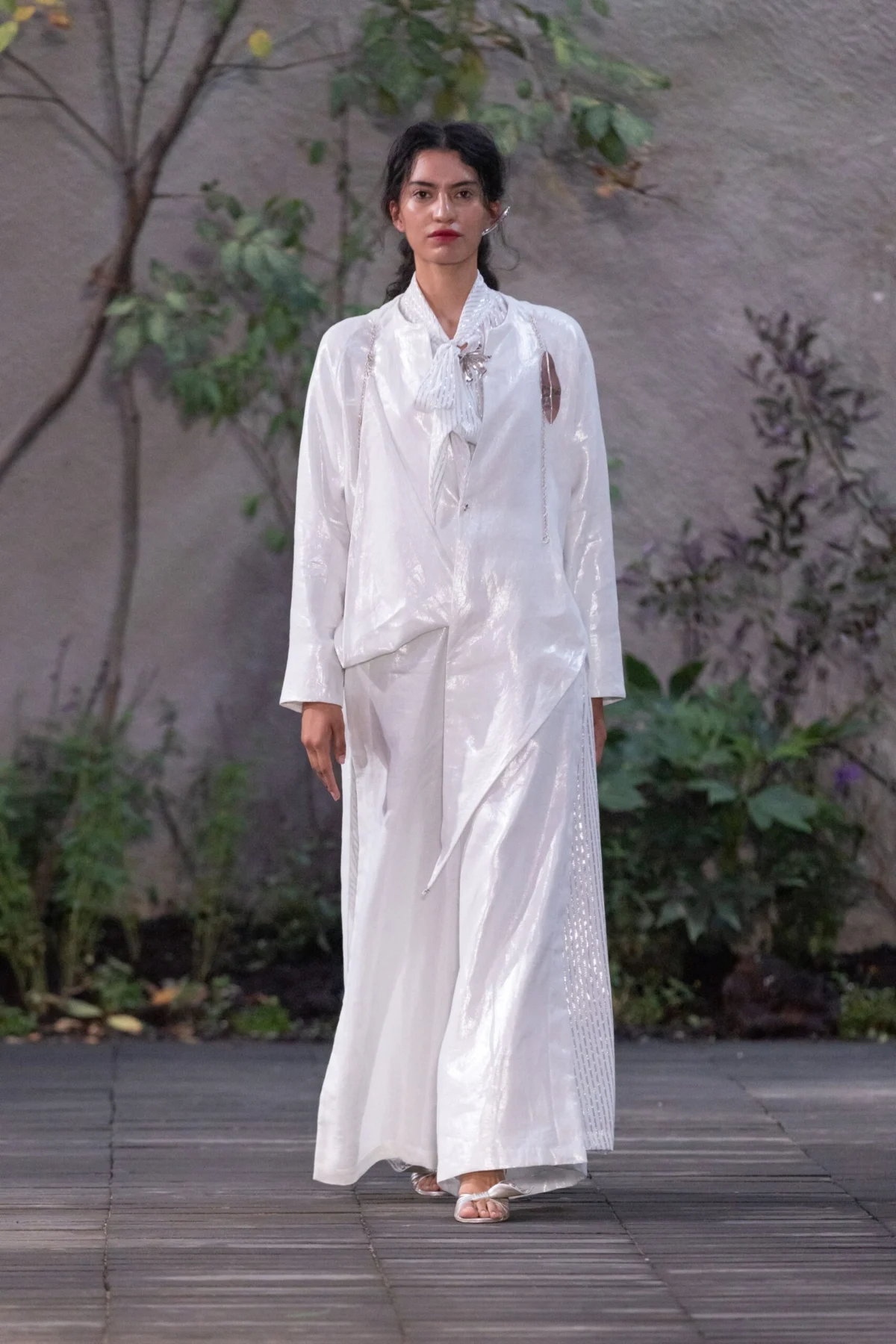
The opening of Mexico Fashion Week saw designer Carla Fernández present a collection that transcended mere garments, offering an erudite exploration of Mexico’s pivotal role in global cultural exchange. In a rare pre-show address, Fernández articulated the profound inspiration behind her latest offering: the historic Manila Galleon trade route. This ambitious starting point immediately signaled a collection steeped in history, inviting attendees to journey through a rich tapestry of transpacific connections that shaped not only Mexico but also the broader world.
The Manila Galleon: A Vein of Global Commerce and Culture
The Manila Galleon trade route, operational for over 250 years from 1565 to 1815, represents one of the earliest and most enduring examples of globalized commerce. Connecting the port of Acapulco in New Spain (present-day Mexico) with Manila in the Spanish Philippines, this maritime artery served as a crucial conduit between Asia, the Americas, and, by extension, Europe. Its establishment marked a turning point in global history, effectively creating the first truly transoceanic trade network.
Historically, the galleons facilitated an unprecedented exchange of goods, ideas, and cultures. From Asia, luxurious silks, intricate porcelain, aromatic spices like pepper, cloves, and cinnamon, lacquerware, and exquisite ivory flowed eastward. In return, the Americas primarily supplied vast quantities of silver—mined from the rich veins of Potosí and Zacatecas—which became the global currency of the era. Beyond silver, indigenous American products such as cochineal (a vibrant red dye), cacao, vanilla, and tobacco also made their way across the Pacific, influencing tastes and industries worldwide. Mexico, with Acapulco as its primary Pacific gateway, was not merely a transit point but a dynamic cultural crucible where these diverse influences first converged, hybridized, and then radiated outward. Fernández’s collection masterfully highlights this often-understated aspect, positioning Mexico not as a passive recipient but as an active, central player in this grand historical narrative of global interconnection.
An Immersive Experience: Performance and Narrative Depth
Fernández’s presentation commenced with an insightful pre-show explanation, a departure from the typical fashion week format where concepts are often left to critics’ interpretation. This deliberate act underscored the intellectual rigor and historical depth embedded in her collection. She emphasized Mexico’s historical centrality, inviting the audience to view the nation through the lens of its active participation in global cultural networks rather than merely as a recipient of external influences.
The narrative unfolded through a captivating performance segment that preceded the traditional runway show. Dancers, clad in loose-fitting, minimalist garments dyed with natural pigments, moved rhythmically around a formation of chairs. The arrangement subtly evoked a game of musical chairs, a poignant metaphor for the fluid and often unpredictable ways in which cultures converge, shift, and influence one another. This performative exploration of cultural coming-together served as a powerful prologue, setting a thoughtful and introspective tone. The minimalist aesthetic of the dancers’ attire provided a stark yet deliberate contrast to the intricate and lustrous garments that would soon grace the runway, creating a clear narrative arc from conceptual simplicity to detailed execution. The choice of natural pigments for the performance wear further hinted at a deep respect for traditional techniques and sustainable practices, a hallmark of Fernández’s broader design philosophy.
Deconstructing the Collection: Threads of History and Modernity
The runway segment of the show revealed a collection rich in symbolism and artisanal craftsmanship, directly translating the historical narrative of the Manila Galleon into contemporary fashion. The initial looks immediately captured attention with their use of lustrous fabrics, evoking the luxurious silks and brocades that were among the most prized goods transported across the Pacific. These materials hinted at the opulence of the trade routes and the sophisticated textile traditions of both Asia and Europe that converged in Mexico.
A distinctive feature was the intricate embroidery, clearly inspired by "papel picado." This traditional Mexican folk art, characterized by delicate cut paper designs often seen at celebrations, was reinterpreted with remarkable finesse. Fernández’s abstraction of "papel picado" into embroidery showcased a sophisticated fusion of popular art with high fashion, demonstrating how deeply ingrained cultural motifs can be elevated and reimagined. Each stitch became a testament to the enduring beauty of Mexican craftsmanship, brought into a modern context.
Adding another layer of meaning were the knots strategically tied at unexpected points on the garments—at the hip, the shoulder, or along a seam. These were not merely decorative elements but profound symbolic gestures. Backstage, Fernández elucidated their significance: "They are the ties, the interweaving of how we become one." This statement directly echoed the collection’s central theme of cultural fusion and interconnectedness, suggesting the myriad ways disparate elements can be bound together to form a cohesive, new identity. The knots served as a tactile representation of the historical and cultural bonds forged by the Manila Galleon.
Further reinforcing the mercantile spirit of the inspiration, the collection prominently featured bags designed to be an integral part of the looks, rather than mere accessories. These accessories, inspired by the merchants who traversed the globe with their precious cargo, underscored the very act of trade, the movement of goods, and, by extension, the flow of ideas and influences. They were a practical homage to the historical figures who made the Galleon trade possible, transforming a utilitarian object into a statement of historical continuity and artistic concept.
Signature Silhouettes and Artisanal Adornments
Carla Fernández’s work is instantly recognizable for its geometric silhouettes, a hallmark of her architectural approach to design. This collection saw these signature forms manifest in elegant wrap skirts, wide-leg trousers that exuded both comfort and sophistication, and impeccably tailored pieces. These clean, structured lines provided a modern canvas, allowing the rich narrative and artisanal embellishments to truly shine. The geometric precision offered a contemporary counterpoint to the historical and handcrafted elements, creating a harmonious balance between tradition and innovation. Subtle floral embroidery adorned some of these structured pieces, introducing an organic touch that might reference the diverse flora exchanged between continents or indigenous botanical motifs, adding a layer of natural beauty to the architectural forms.
The collection’s adornments, particularly the silver jewelry, further cemented its narrative and paid homage to Mexico’s illustrious silversmithing tradition. Mexico has a rich heritage in silverwork, with centers like Taxco renowned globally, tracing back to pre-Hispanic metallurgy. Fernández incorporated this legacy through a range of distinctive pieces. Chili pepper-shaped earrings and pendants offered a playful yet iconic nod to a quintessential Mexican symbol, celebrating local identity with a sophisticated twist. Engraved hoop earrings, a classic jewelry form, were elevated with intricate detailing, showcasing the finesse of Mexican craftsmanship. Perhaps the most striking were the leaf-shaped ear cuffs, bold and modern pieces that extended across much of the ear. These organic forms, crafted in silver, could symbolize the bounty of nature or the leaf patterns prevalent in many traditional crafts, demonstrating a keen eye for integrating natural motifs into contemporary design. The jewelry, therefore, was not merely an accessory but an extension of the collection’s overarching narrative, deeply rooted in Mexico’s cultural and artisanal heritage.
The Personal Tapestry: Carla Fernández’s Roots
The profound connection to Mexican history and craftsmanship evident in the "Manila Galleon" collection is deeply rooted in Carla Fernández’s personal background. Her father’s distinguished career as the director of museums and exhibitions at Mexico’s National Institute of Anthropology and History (INAH) played a formative role in shaping her worldview and artistic sensibilities. Growing up immersed in the nation’s vast cultural and historical wealth, Fernández developed an innate appreciation for traditional craftsmanship, ethnography, and material culture from a very young age. This upbringing provided her with an unparalleled foundation, allowing her to view Mexican heritage not as a static relic but as a living, evolving source of inspiration.
Fernández has long been celebrated for her collaborative approach with indigenous artisans across Mexico, a testament to her commitment to preserving and revitalizing traditional techniques through her brand, "Taller Flora." This initiative, which focuses on fair trade and sustainable practices, exemplifies her dedication to ensuring that the stories and skills of Mexico’s diverse communities continue to thrive. For Fernández, design is not merely about aesthetics; it is an act of cultural preservation, economic empowerment, and historical storytelling. This collection, therefore, serves as a poignant and "deft exploration" not only of a significant chapter in Mexico’s national history but also of her own deeply personal journey, demonstrating how individual experiences can illuminate broader cultural truths and global connections. Her work positions the designer as both an archivist and an innovator, bridging the past and the present with extraordinary sensitivity and vision.
Broader Implications: Fashion as Cultural Diplomacy and Sustainable Practice
Carla Fernández’s "Manila Galleon" collection, and indeed her entire body of work, carries significant implications for the landscape of global fashion and cultural dialogue. By opening Mexico Fashion Week with such a historically rich and intellectually rigorous collection, Fernández reinforces her position as a leading voice in elevating Mexican design on the international stage. Her meticulous research and sophisticated interpretations challenge stereotypical perceptions of Mexican fashion, showcasing its complexity, historical depth, and contemporary relevance. This contributes significantly to cultural diplomacy, presenting Mexico as a sophisticated contributor to global aesthetics and intellectual discourse, rather than merely a source of artisanal craft. The platform of Mexico Fashion Week itself is crucial in amplifying these narratives, fostering an environment where local talent can gain global recognition.
Beyond its cultural narrative, the collection implicitly champions sustainable and ethical fashion practices, areas where Fernández is a recognized pioneer. While not explicitly detailed as a sustainability initiative for this particular collection, her established commitment to fair trade, direct collaboration with artisanal communities, and the use of handcraft and locally sourced materials are foundational to her brand’s ethos. The choice of natural pigments for the performance garments further underscores a respect for traditional, environmentally conscious methods. In an industry increasingly scrutinized for its environmental and social impact, Fernández’s approach offers a compelling model for how fashion can be culturally rich, ethically responsible, and economically empowering for traditional communities.
Furthermore, the collection exemplifies a growing trend in fashion where designers use historical themes as a powerful medium for contemporary relevance. Fernández’s masterful execution of this approach, making a seemingly distant past vibrant and pertinent, demonstrates the power of clothing to tell stories, educate, and provoke thought. It highlights fashion’s capacity to transcend commercialism and become a vehicle for historical narrative, cultural commentary, and critical engagement with our shared global heritage. Her work reminds us that fashion, at its most profound, is a reflection of human history, ingenuity, and interconnectedness.
Conclusion: A Forward-Looking Homage
Carla Fernández’s "Manila Galleon" collection at Mexico Fashion Week was more than a display of new designs; it was a meticulously crafted journey through history, culture, and the enduring power of global connections. By drawing upon the intricate legacy of the Manila Galleon, Fernández not only showcased her exceptional design prowess but also underscored Mexico’s often-overlooked centrality in the genesis of global trade and cultural exchange. The collection successfully fused historical narratives with contemporary silhouettes, traditional craftsmanship with modern interpretation, and personal heritage with national identity.
Fernández continues to carve a unique niche in the fashion world, not just as a designer, but as a cultural ambassador and an advocate for ethical practices. Her work consistently demonstrates that fashion can be a powerful tool for education, preservation, and dialogue. The "Manila Galleon" collection stands as a testament to her vision, a forward-looking homage that celebrates a foundational chapter of global history while simultaneously charting a course for a more culturally conscious and sustainably minded future in fashion. It reminds us that the threads of history are perpetually interwoven with the fabric of the present, constantly shaping who we are and where we are headed.
