
 By admin
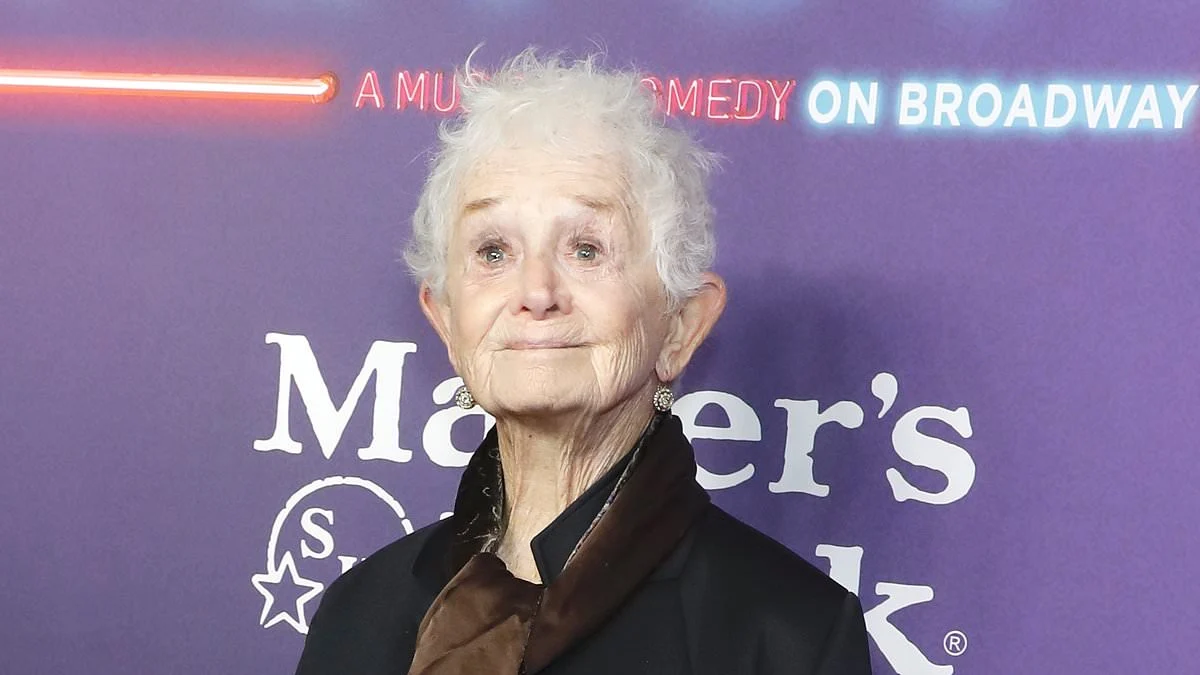
Barbara Barrie, the Academy Award-nominated actress whose career spanned seven decades of stage, screen, and television, died this week at her home in Manhattan at the age of 95. Her death, confirmed by her family, was facilitated through medical aid in dying, a practice for which she had been a vocal and long-standing advocate. Diagnosed with terminal cancer, Barrie chose to exercise her right under New York’s Medical Aid in Dying Act, a piece of legislation that became legal in the state on August 5 of this year. Her passing marks the end of a life defined not only by "scene-stealing" performances but also by a fierce commitment to social activism, public health awareness, and the destigmatization of life-altering medical conditions.
Throughout her illustrious career, Barrie was recognized for her versatility, earning critical acclaim for her roles in the landmark musical Company, the classic sitcom Barney Miller, and the 1979 film Breaking Away. However, she frequently asserted that her work as an activist was the true cornerstone of her legacy. In interviews, she often dismissed the prestige of Hollywood accolades, stating, "I can’t stand that kind of thing. Your life is more important than your work." This philosophy guided her through decades of campaigning for women’s reproductive rights, educational preservation, and cancer awareness.
The Final Act: Medical Aid in Dying and New York Legislation
Barrie’s decision to utilize medical aid in dying was the culmination of years of advocacy for end-of-life autonomy. The Medical Aid in Dying Act, which was signed into law in New York earlier this year, allows terminally ill, mentally competent adults with a prognosis of six months or less to live to request and self-administer medication to end their suffering. Barrie had long been a proponent of this legislation, viewing it as a fundamental human right to die with dignity in one’s own home.
Her health challenges were significant and well-documented. In 2014, she disclosed a diagnosis of idiopathic pulmonary fibrosis (IPF), a chronic and incurable lung disease that causes permanent scarring of the lungs. At the time, she vowed to use her remaining years to help others navigate similar diagnoses. "I have a very full, active life, but what lies ahead is unknown and yet known at the same time," she said in a statement following her IPF diagnosis. "I am living full steam ahead and am now trying to help other people do the same." The subsequent diagnosis of terminal cancer led her to the decision to utilize the newly legal medical provisions in New York, fulfilling her wish to pass away peacefully in her Manhattan residence.
A Legacy of Reproductive Rights and Feminist Activism
Long before she became a household name for her roles in 1990s television, Barbara Barrie was a fixture in the burgeoning feminist movement of the 1970s. She was an early ally of Gloria Steinem and a supporter of Ms. Magazine, the first national magazine to be owned and operated by women.
In 1972, Barrie took a significant personal and professional risk by participating in a public manifesto titled "We Have Had Abortions." Published in the inaugural issue of Ms., the petition featured the signatures of 53 prominent women, including Barrie, Nora Ephron, and Billie Jean King. The manifesto demanded the legalization of abortion and the removal of the stigma surrounding reproductive healthcare. This public stance was revolutionary at the time, occurring a full year before the landmark Roe v. Wade Supreme Court decision of 1973.
The impact of this campaign was immediate. The debut issue of Ms. sold out its 300,000-copy print run in just eight days and generated more than 26,000 subscription orders. For Barrie, the fight for reproductive rights was not a temporary cause but a lifelong commitment. Following the overturning of Roe v. Wade in 2022, she continued to voice her support for women’s autonomy, linking her early activism to the modern struggle for reproductive freedom.
Destigmatizing Rectal Cancer and Colostomy Care
In 1994, Barrie faced a life-altering diagnosis of rectal cancer. The successful treatment required a permanent colostomy, a procedure that many at the time viewed with shame or secrecy. Rather than withdrawing from the public eye, Barrie chose to use her platform to break the silence surrounding the disease.
She authored two memoirs focused on her journey: Second Act: Life after Colostomy and Other Adventures (1997) and Don’t Die of Embarrassment: Life After Colostomy and Other Adventures (1999). In these works, she discussed her health with what critics described as "resolute optimism and a sense of acceptance." She frequently recounted a story about a cousin who revealed that their family had a history of colon cancer going back three generations—a fact that had been kept secret because of the social stigma associated with the word "rectum."
"No, I didn’t know this was in our family because in those days, you didn’t say rectum, or cancer," Barrie recalled. "I think if I can get the word out on this thing, that will be my legacy." Her efforts to normalize the use of colostomy bags and to encourage early screening were credited with helping thousands of patients overcome the psychological hurdles of the surgery. She often emphasized that life did not end with a diagnosis, famously stating: "I work out, I go to the gym, we make love, we go bicycling in Europe every year."
Seven Decades of Artistic Excellence
While her activism was her priority, Barrie’s contribution to the arts was profound. She was a graduate of the University of Texas at Austin and refined her craft at the Herbert Berghof Studio in New York. Her breakout film role came in 1964 with One Potato, Two Potato, a pioneering drama about an interracial marriage, for which she won the Best Actress award at the Cannes Film Festival.
Her most recognized film role arrived in 1979 as Evelyn Stohler, the patient and nurturing mother in Breaking Away. The performance earned her an Academy Award nomination for Best Supporting Actress. Although she lost to Meryl Streep (for Kramer v. Kramer), Barrie reprised the role in the 1981 television series of the same name, earning an Emmy nomination.
On Broadway, Barrie was a favorite of the industry’s most prestigious creators. In 1970, she originated the role of Sarah in Stephen Sondheim’s Company, a performance that earned her a Tony Award nomination. She also starred in Neil Simon’s The Prisoner of Second Avenue and California Suite, and took on the role of the formidable mother in Harvey Fierstein’s Torch Song Trilogy in 1983.
To younger audiences, she was best known for her work in television. She played Elizabeth Miller, the wife of the titular character in Barney Miller, from 1975 to 1982. Later, from 1996 to 2000, she reached a new generation of fans as Nana, the eccentric and sharp-witted grandmother of Brooke Shields’ character on the NBC sitcom Suddenly Susan.
Community Advocacy and Local Impact
Barrie’s activism extended to her local community in New York City. She was a key figure in the movement to save the PS 9 Sarah Anderson School in Manhattan from demolition. Recognizing the importance of local education and historic preservation, she organized protests, circulated petitions, and used her celebrity status to bring media attention to the cause. Her efforts were successful, and the school remains a vital part of the Upper West Side community today. This local victory reflected her broader belief that individuals have a responsibility to protect the institutions that serve their neighbors.
Chronology of a Distinguished Life
- 1929: Born Barbara Ann Berman in Chicago, Illinois.
- 1950s: Begins her acting career on television and stage in New York.
- 1964: Wins the Best Actress Award at the Cannes Film Festival for One Potato, Two Potato.
- 1970: Earns a Tony Award nomination for her role in Stephen Sondheim’s Company.
- 1972: Signs the "We Have Had Abortions" petition in the first issue of Ms. Magazine.
- 1975–1982: Stars as Elizabeth Miller in the hit sitcom Barney Miller.
- 1979: Receives an Academy Award nomination for Best Supporting Actress for Breaking Away.
- 1994: Diagnosed with rectal cancer; begins her campaign to destigmatize the disease.
- 1996–2000: Stars as Nana in Suddenly Susan.
- 1997: Publishes her first memoir, Second Act.
- 2007: Her husband of 43 years, Jay Harnick, passes away.
- 2014: Discloses a diagnosis of idiopathic pulmonary fibrosis.
- 2024: Becomes a proponent of New York’s Medical Aid in Dying Act.
- 2024: Dies at age 95 via medical aid in dying in Manhattan.
Broader Implications and Final Reflections
The death of Barbara Barrie highlights the growing intersection between celebrity influence and the legislative movement for end-of-life choices. By choosing to die via medical aid and being public about her advocacy, Barrie has provided a high-profile case study for the implementation of New York’s new law. Medical ethics experts suggest that such public disclosures by respected figures can significantly impact public perception and the eventual adoption of similar laws in other states.
Barrie’s life was a testament to the idea that fame is most valuable when used as a tool for social progress. From the picket lines of reproductive rights to the quiet rooms of terminal care, she remained a "trailblazer" in the truest sense. Her legacy will be measured not just in the films and plays she left behind, but in the lives of those who found courage through her books and the patients who now have the legal right to choose their own end.
Barbara Barrie was preceded in death by her husband, Jay Harnick, the founder and artistic director of TheaterWorksUSA. She is survived by her daughter, Jane; her son, Aaron; and three granddaughters. In accordance with her wishes, her family has requested that her life be celebrated not through mourning, but through continued advocacy for the causes she championed.
