
 By admin
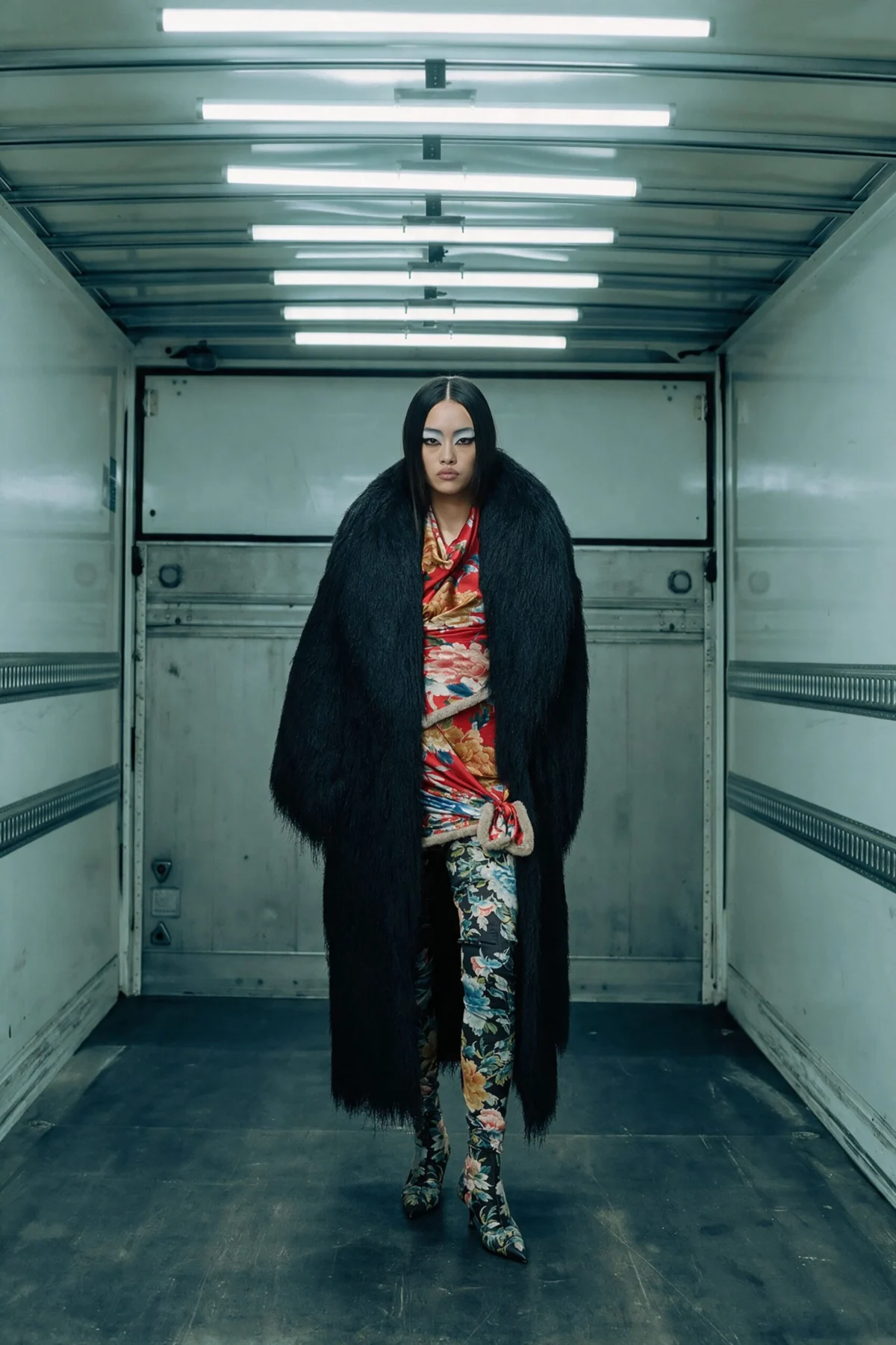
The doors to Wang Contemporary, a meticulously refurbished landmarked bank building purchased last spring by designer Alexander Wang and his mother, have officially opened, marking a significant new chapter for the brand. This grand, domed edifice, now transformed into a dynamic hybrid gallery and showroom, stands prominently over Canal Street, strategically positioned at the vibrant intersection with bustling Chinatown. It was within this newly minted cultural and commercial nexus that Alexander Wang chose to unveil his latest resort collection, presenting a profound evolution of his design ethos. Guests ascended seven floors in a classic caged elevator, emerging into a mood-laden, atmospherically lit space where dark, curtained tableaux displayed the collection on mannequins, hinting at the building’s future as a versatile hub, including a forthcoming private omakase dining experience.
A New Home for a Revitalized Vision: The Wang Contemporary
The acquisition and year-long refurbishment of the former bank building represent a strategic investment not merely in real estate, but in the physical embodiment of the Alexander Wang brand’s future. Located at a pivotal cross-section of Manhattan, the Wang Contemporary is more than just a retail or exhibition space; it is envisioned as a multifaceted cultural institution. The building itself boasts a rich history, characteristic of early 20th-century American financial architecture, often featuring grand Beaux-Arts or Neoclassical elements. While specific architectural details of this particular landmarked bank are not disclosed in the immediate announcement, such structures are typically distinguished by their imposing facades, high ceilings, intricate detailing, and, as mentioned, a prominent dome—features that speak to an era of opulence and stability. The refurbishment process, spanning a full year, would have involved a delicate balance of preserving the building’s historical integrity, mandated by its landmark status, while integrating modern infrastructure and design sensibilities suitable for a contemporary fashion house and gallery. This careful renovation underscores Wang’s commitment to creating enduring spaces that resonate with both heritage and innovation. The decision to locate this flagship enterprise at the edge of Chinatown, a district rich in cultural heritage and a constant source of inspiration for many New York creatives, further embeds the brand within the city’s diverse fabric, connecting it to a global diaspora while remaining distinctly New York.
Alexander Wang’s Evolving Aesthetic: From Downtown Cool to Global Glamour
Alexander Wang, a designer long celebrated for his distinctive "downtown cool" aesthetic, characterized by utilitarian luxury, relaxed silhouettes, and an edgy sensibility that defined a generation of New York fashion, has embarked on a noticeable trajectory of artistic maturation. His journey, which saw him rise to prominence in the late 2000s, followed by a tenure at Balenciaga from 2012 to 2015, has been marked by a consistent push to refine and redefine his namesake brand. In recent years, particularly following a period of re-evaluation and a strategic shift in his brand’s operational model, Wang has been exploring new dimensions of luxury and cultural expression. Last season’s collection, for instance, while expressing an interest in "opulence," translated this into a relatively spare, streamlined offering—fun, youthful, flirty, and undeniably sexy. This current resort collection, however, marks a more comprehensive and richly realized articulation of that burgeoning interest in the lavish and ornate, signaling a deliberate and confident step into a more expansive creative territory.
The resort collection holds significant commercial importance within the fashion calendar, serving as a bridge between the main spring/summer and autumn/winter seasons. These collections are designed to offer more commercially viable, often travel-friendly pieces that cater to clients seeking trans-seasonal wardrobes. For Wang, presenting such a collection in a newly established, multi-functional hub like Wang Contemporary not only highlights the practical appeal of the garments but also elevates the brand experience, demonstrating a holistic approach to luxury that extends beyond clothing to lifestyle and cultural engagement.
Cultural Fusion: The Allure of Peking Opera and Huaniaohua
The cornerstone of Wang’s resort collection is an intricate dialogue between traditional Chinese aesthetics, specifically those drawn from Peking opera (Jingju), and a contemporary Western wardrobe. Peking opera, a revered national art form of China with a history spanning over two centuries, is renowned for its elaborate costumes, stylized movements, symbolic makeup, and rich narrative tradition. Its visual splendor, particularly the vibrant colors, intricate embroideries, and theatrical silhouettes of its costumes, provides an exceptionally fertile ground for fashion interpretation. Wang’s decision to draw directly from this deep cultural wellspring reflects a broader trend in global fashion towards cross-cultural exploration, yet his approach is distinctly personal, rooted in his own heritage.
A key artistic influence identified in the collection is the huaniaohua style, a traditional Chinese painting genre literally meaning "bird-and-flower painting." This art form, which emerged during the Tang Dynasty (618-907 AD) and flourished through subsequent imperial periods, emphasizes delicate brushwork, symbolic natural motifs, and a harmonious composition that often conveys deeper philosophical meanings related to prosperity, longevity, and beauty. Wang has masterfully translated these richly drawn floral motifs onto draped tops, flowing skirts, and wrapped bandeaus, each piece edged with faux fur, introducing a tactile dimension that juxtaposes traditional artistry with modern material innovation. The recontextualization of these ancient patterns onto contemporary silhouettes, such as high-heeled boots that dramatically reach well north of the thigh, creates a compelling visual tension—a conversation between past and present, East and West, formal elegance and audacious modernity. This careful integration demonstrates a nuanced understanding of cultural appropriation versus appreciation, aiming to celebrate and reinterpret rather than merely borrow.
Elegance and Refinement: A New Facet of Wang’s Design Language
Beyond the direct cultural references, the collection introduces a distinct vein of old-world glamour and refined elegance, elements not always immediately associated with Wang’s previously established "casual, cool-girl" aesthetic. This newfound maturity is evident in several key design elements:
- Silk Twill Fringe: Densely covering cocooning evening coats with beefy shawl lapels, this material choice injects a sense of luxurious movement and texture. The fringe, a detail often found in historical garments and decorative arts, is here rendered with a contemporary sensibility, adding a sophisticated drape and shimmer.
- Structured Silhouettes: A floor-length strapless dress with a subtle, built-in hourglass shape, and a mod-ish, straight-line skirt-and-top set, demonstrate a foray into more tailored and structured forms. These pieces speak to a timeless elegance that transcends seasonal trends, suggesting a broader appeal for the brand.
- Reimagined Classics: A tuxedo jacket is ingeniously reimagined as a mini wrap dress, its vented back elongated into a dramatic fishtail, blending formal wear with playful deconstruction. This piece exemplifies Wang’s ability to subvert traditional garments while retaining their inherent sophistication.
- Unexpected Luxury: A lustrous two-piece gown features a cropped, boxy top inspired by a pillowcase—a whimsical touch that juxtaposes the mundane with the luxurious, adding an element of surprise and comfort to high fashion.
These offerings collectively point to a deliberate expansion of Wang’s design vocabulary, embracing a more sophisticated and diverse clientele who appreciate both his signature edge and a newfound depth in his approach to glamour. This shift could be seen as a strategic move to broaden the brand’s market appeal, attracting consumers who seek investment pieces that combine contemporary design with enduring elegance.
"Hybrid State": The Evolution of Wang’s Signature Aesthetic
The second half of the collection, aptly titled "Hybrid State," delves deeper into Wang’s established idiom of "pre-styled garments with a slight wink." This concept, which plays on the idea of effortless chic through clever design, is a hallmark of his brand. Here, it is explored through:
- Deconstructed Familiarity: A jean jacket and skirt are ingeniously designed to appear twisted upside down, creating a visually arresting and playful reinterpretation of everyday denim. This technique, often referred to as trompe l’oeil or deconstruction, challenges perception while maintaining wearability.
- Layered Illusions: A single piece crafted to mimic a camisole layered over a long-sleeve T-shirt offers the illusion of carefully curated styling in one effortless garment, catering to the modern consumer’s desire for convenience without sacrificing style.
- Elevated Casualwear: Dark, roomy trousers with a loose ruffle down the side infuse a sense of relaxed luxury into a staple item. A "nerdy" cardigan is spiffed up with an argyle print intricately picked out in crystals, transforming a classic academic motif into a statement piece of understated sparkle.
- Pop Culture Artistry: T-shirts featuring airbrushed graphics of Peking opera performers, embellished with a subtle smattering of sparkle, represent a direct and accessible fusion of high art and street culture. These pieces, described as Wang in his "classic, downtown element," were notably among the most successful in the lineup, demonstrating his continued ability to translate complex themes into commercially appealing and culturally relevant garments.
These "Hybrid State" pieces serve as a crucial anchor, connecting the collection’s more elaborate and culturally specific designs back to the brand’s core identity. They reaffirm Wang’s mastery of blending high-fashion concepts with an accessible, irreverent spirit, ensuring that the collection appeals to both his loyal fanbase and those new to his evolving vision.
Designer’s Intent and Broader Implications
Alexander Wang articulates his vision for this collection as "an evolution of the last collection," emphasizing a conscious engagement with "rituals, traditionalism, these things we haven’t really explored before as a visual language." His inquiry, "How do we approach these?" and his enduring interest in "things that feel foreign to us and then bringing it in," underscore a thoughtful and inquisitive design philosophy. Crucially, he poses the question: "Even though these things can look very dressed-up, is there a way we can bring them into the everyday?" This query encapsulates the collection’s core tension and its innovative resolution—the ability to imbue everyday wear with the grandeur of historical and cultural narratives.
This collection’s focus on cultural fusion and elevated elegance carries significant implications for Alexander Wang’s brand trajectory and the broader fashion landscape. Firstly, it positions Wang as a designer capable of sophisticated cultural commentary, moving beyond his initial pigeonhole as a purveyor of "cool." This maturity could resonate positively with critics and buyers who are increasingly looking for depth and narrative in luxury fashion. Secondly, the successful integration of Chinese cultural elements, particularly from Peking opera and huaniaohua, demonstrates a sensitive approach to cross-cultural design, potentially opening new markets and strengthening his connection to a global clientele, especially in Asia where the brand already has a strong presence. Thirdly, the establishment of Wang Contemporary as a multi-functional space reflects a growing trend among luxury brands to create immersive brand experiences that transcend traditional retail. These physical hubs become cultural destinations, fostering deeper engagement and loyalty in an increasingly digital world. This move signifies Wang’s strategic intent to not only sell clothes but to curate a lifestyle and cultural dialogue around his brand.
In conclusion, Alexander Wang’s resort collection, presented within the majestic confines of the new Wang Contemporary, is a testament to a designer in full creative stride, confidently navigating an evolving aesthetic. By seamlessly weaving together the rich tapestry of Peking opera and huaniaohua with his signature urban sensibility, Wang has crafted a collection that is both deeply personal and universally appealing. It is a bold declaration of a brand’s evolution, offering a compelling vision of how cultural heritage can be reimagined for the contemporary wardrobe, pushing the boundaries of what "luxury" can mean in the 21st century.
