
 By admin
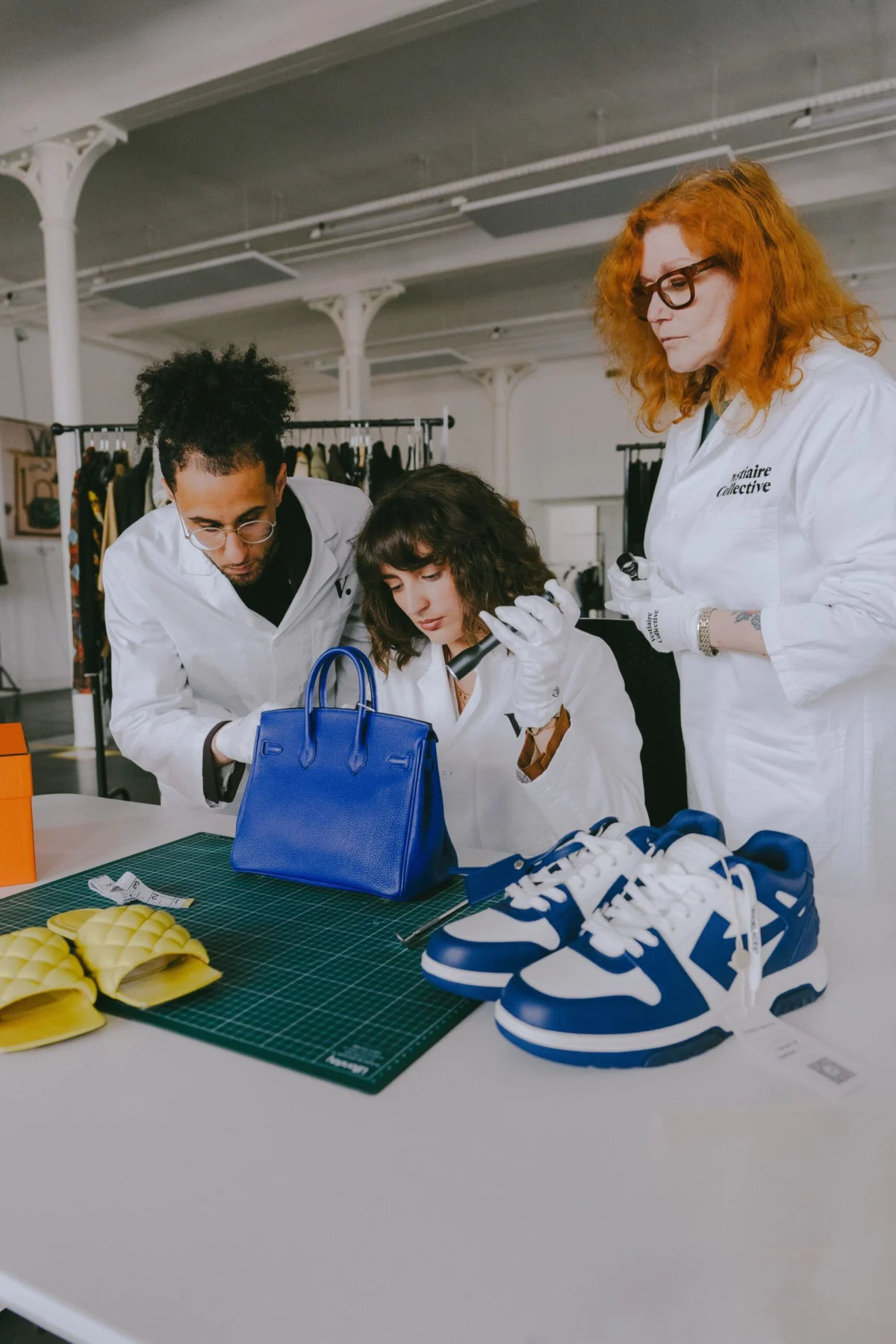
In the heart of Torcoing, northern France, within the cavernous confines of an old spinning mill, lies Vestiaire Collective’s largest authentication warehouse—a formidable fortress in the global battle against luxury counterfeits and, increasingly, stolen merchandise. The scale and meticulousness of the operation are immediately apparent to any visitor. Security personnel meticulously escort guests through imposing metal gates into a discreet red brick edifice, where a mandatory locker policy for personal belongings underscores the high-stakes environment. Inside, the factory floor hums with activity: workers, distinguished by their white Vestiaire Collective lab coats, tirelessly unpack incoming items from conveyor belts, subjecting each piece to rigorous authentication and condition checks before re-packaging them for their journey to discerning buyers worldwide.
Vestiaire Collective has long championed a multi-layered approach to verifying luxury goods, a cornerstone of its mission to eradicate counterfeits and combat fraud within the burgeoning resale market. However, the platform now confronts a novel and insidious challenge. Following a spate of widespread lootings that swept across France and Italy starting October 17, unsettling reports began to emerge of high-value stolen goods potentially surfacing on popular resale platforms. Iconic luxury brands such as Louis Vuitton, Dior, Celine, and Hermès, all perennial favorites on Vestiaire Collective, found their boutiques targeted. In response, the marketplace has swiftly initiated stringent new measures aimed at preventing the unwitting resale of items illicitly acquired from the devastated shop floors of Milan and Paris.
The Unprecedented Challenge: Looting and the Resale Market
The events of mid-October marked a significant escalation in social unrest across parts of France and Italy, leading to targeted attacks on numerous luxury retail establishments. While specific monetary figures for the total value of stolen goods are still being tallied, preliminary estimates suggest damages running into the millions of euros, representing a severe blow to the affected brands and retailers. This surge in stolen inventory presents a unique and complex problem for the luxury resale sector. Unlike counterfeit items, which are inherently fake, looted goods are authentic products whose provenance is illegitimate. This distinction necessitates a shift in authentication tactics, moving beyond merely verifying authenticity to scrutinizing the legality of ownership and the circumstances of sale.
The luxury resale market, valued at an estimated $33 billion in 2021 and projected to reach $51 billion by 2026, thrives on trust and transparency. Platforms like Vestiaire Collective have built their reputation on assuring buyers of the authenticity and legitimate origin of their purchases. The sudden influx of potentially stolen items threatens to undermine this foundational trust, creating a ripple effect that could impact both consumer confidence and the integrity of the entire secondary market. The sheer volume of items looted dramatically increased the risk of such goods entering the resale ecosystem, making enhanced inspection, monitoring, and authentication processes more critical than ever before.
Vestiaire Collective’s Fortified Defenses: A Deep Dive into Authentication

At its core, Vestiaire Collective’s authentication process is a sophisticated blend of cutting-edge technology and unparalleled human expertise. When an item arrives at the authentication center, it first undergoes preliminary checks, often aided by AI algorithms designed to flag suspicious listings. These algorithms are trained to identify anomalies in seller behavior, pricing, and item descriptions that might indicate fraudulent activity or the sale of non-genuine products.
Once an item clears these initial digital hurdles, it enters the realm of specialist authenticators. These highly trained professionals possess an encyclopedic knowledge of luxury brands, meticulously examining every detail—from typography and stitching to engraving, hardware, and materials. Tools such as UV lamps and magnifying glasses are deployed to scrutinize minute features, identify inconsistencies, and uncover any tell-tale signs of counterfeiting. The process is exhaustive, often taking several minutes per item, especially for highly intricate pieces. Finally, a quality control inspector verifies that the item’s dimensions, color, and stated condition precisely match its online listing, ensuring accuracy for the prospective buyer.
However, distinguishing a legitimate item from a stolen one adds an entirely new layer of complexity. Regular authentication tactics, designed to spot fakes, are not inherently equipped to identify items that are genuinely manufactured but illegally obtained. This necessitates a proactive and adaptive response, moving beyond product characteristics to scrutinize seller behavior and leverage external intelligence.
Rapid Response: A Chronology of Action
The immediate aftermath of the October 17 lootings saw Vestiaire Collective spring into action. On Monday, October 19, just two days after the initial incidents, the company convened an emergency meeting involving its commercial and legal departments. The objective was clear: to swiftly brief teams on how to identify and respond to suspicious listings that might be linked to the recent thefts.
Candice Francisco, Vestiaire Collective’s PR manager, confirmed the heightened vigilance during a visit to the warehouse. "All of our teams are more and more vigilant," she stated. Employees were specifically instructed to monitor for new user profiles uploading multiple "never-before-worn" pieces in rapid succession—a classic red flag for individuals attempting to offload stolen merchandise quickly. "If you have an account made two days ago with never worn Celine, it’s a bit suspicious," Francisco noted, highlighting the practical indicators their teams are now trained to detect. As of that time, while no confirmed stolen goods had been identified on the platform, the proactive measures were fully underway, including meticulous verification of all new members.
Victoire de Coutard, Vestiaire Collective’s senior brand manager and authentication specialist, further elaborated on the protocol. "When anomalies are detected, we take appropriate preventative measures, including quarantining listings to demand verifiable proof of purchase and systematically complying with official judicial requisitions to support police investigations." This comprehensive approach underscores the platform’s commitment to both proactive prevention and reactive cooperation with law enforcement.

If an item is suspected of being stolen, Vestiaire Collective’s policy is unequivocal: listings are immediately removed, seller accounts are restricted, and verified proof of provenance or purchase is rigorously required before any item can proceed. "Establishing whether a specific item has been stolen requires verified ownership and police records so our operational response relies heavily on our longstanding relationships with brand rights holders, retailers, or e-tailers and public authorities in France and abroad," de Coutard explained. These established channels of communication with brands allow for alerts on suspicious items, including prototypes or products with unique serial numbers or identifying features that might have been flagged as stolen.
Government Intervention and Industry Collaboration
The issue of looted goods resurfacing on resale platforms quickly caught the attention of government authorities. Also on October 19, France’s Minister of the Economy, Roland Lescure, convened an emergency meeting to address the escalating problem. Platforms including Vinted, eBay, and Leboncoin were briefed on the urgent need for measures to prevent the resale of these illicit goods. The government demanded regular reporting of enforcement activities from these platforms, with the first report expected within 48 hours of the briefing, signaling a clear governmental expectation for immediate and effective action.
While Vestiaire Collective itself did not directly attend this ministerial meeting, it was represented by the Fédération du e-commerce et de la vente à distance (FEVAD), of which it is a prominent member. De Coutard clarified that the governmental meeting primarily targeted mass-market, peer-to-peer resale platforms and open classified sites, which typically handle massive volumes of uncurated, low-cost goods. She emphasized that while no platform can be entirely immune to the infiltration of stolen items, Vestiaire Collective operates a "highly controlled" model. This model leverages both advanced technology, including AI for initial screening, and specialized human expertise to meticulously curate and authenticate every item. "Consequently, we were not the primary target of these specific governmental discussions," de Coutard added, highlighting Vestiaire’s distinct operational integrity.
The French government also issued a stark warning: both buyers and sellers could face severe legal consequences for transactions involving goods stolen during the recent unrest. For resale platforms, which are inherently built on principles of buyer and seller trust, this legal imperative means the challenge extends beyond merely determining a luxury good’s authenticity to verifying its legal eligibility for sale.
The Nuance of Identification: Beyond Counterfeits
The process of identifying stolen goods presents a far more intricate challenge than detecting counterfeits. As Henric Hadrien, Vestiaire Collective’s authentication site director, explained, "It’s not difficult to create five different accounts and post across them." During peak periods, such as the upcoming Black Friday sale, Vestiaire Collective anticipates processing between 1,500 and 3,000 items daily during the week-long retail holiday. Managing such high volumes, particularly in the wake of a mass looting event, makes the task of identifying stolen items incredibly arduous. "Sometimes, it’s impossible to know if you don’t have the serial number," Hadrien admitted, underscoring the limitations even for expert authenticators.

However, Vestiaire Collective is not new to dealing with stolen merchandise. Prior to the October lootings, the company had already received alerts from Italian and German police regarding potentially stolen items on its platform. "We removed the item from the site and processed it in a discreet way that does not alert the seller right away, and we follow the instructions of the police," Hadrien detailed. If sufficient reason exists to believe an item is stolen, it is shipped to the police, with coordination from Vestiaire’s legal team and relevant national police departments. In cases where a buyer has already received a stolen item, they are fully reimbursed, demonstrating the platform’s commitment to consumer protection.
Beyond immediate alerts, Vestiaire Collective’s authentication process also encompasses broader commercial industry standards. This includes not only identifying counterfeit and stolen goods but also flagging items made from fur, exotic skins, or ivory that cannot be legally exported due to international regulations. The platform also works to protect the anonymity of high-profile sellers and prevent fraudulent returns where buyers attempt to substitute genuine products with counterfeits. Occasionally, items originating from employee or "friends and family" sales are removed if they violate brand agreements, though sellers are not typically banned for such instances. "If there has been a conversation with the brand about a recent employee sale, for example, we send the product back to the seller," Hadrien noted, without disclosing specific brand partners.
Maintaining Trust in a Volatile Landscape
"It’s important to be transparent and serious on this topic," de Coutard stressed. "Trust doesn’t only cover counterfeit, but all items that don’t follow the commercial rules of the fashion industry." This philosophy underpins Vestiaire Collective’s proactive stance. The integrity of the luxury resale market hinges on the unwavering trust of its community—both buyers and sellers—that every transaction is legitimate and ethical. The threat of stolen goods introduces a new dimension to this trust, demanding even greater vigilance and sophisticated operational responses.
The events of October 17 served as a stark reminder of the vulnerabilities within the luxury supply chain and the challenges faced by platforms operating in the secondary market. In anticipation of further unrest, many luxury brands in France took preventative measures ahead of a subsequent protest on October 24, boarding up stores and hiring private security. While the scale of damage on October 24 was significantly lower—a preliminary government report indicated 24 businesses looted across France compared to 1,522 a week earlier—the underlying threat remains.
The Evolving Role of Technology and Human Expertise
The ongoing challenge highlights the critical interplay between advanced technology and human expertise. While AI can efficiently monitor listings for suspicious patterns and flag anomalies at scale, the nuanced task of verifying provenance and collaborating with authorities often requires human judgment, specialized knowledge, and established relationships. As the methods of illicit trade evolve, so too must the defenses employed by platforms like Vestiaire Collective. This necessitates continuous investment in AI development, training for authenticators, and strengthening collaborative ties with luxury brands and law enforcement agencies.

The ability to track products via unique serial numbers, RFID tags, or other identifying features becomes paramount. While not all luxury items possess such trackability, increased adoption of these technologies by brands could significantly bolster efforts to identify and recover stolen merchandise on the secondary market.
Future Outlook for Luxury Resale Integrity
As the situation develops and the luxury resale market continues its exponential growth, the challenge of maintaining integrity against both counterfeits and stolen goods will persist. For platforms like Vestiaire Collective, the path forward involves relentless vigilance, continuous adaptation of authentication protocols, and robust collaboration across the industry. This includes deepening relationships with brand rights holders, retailers, e-tailers, and public authorities both domestically and internationally.
The overarching goal remains to uphold the reputation of the luxury resale market as a trusted, sustainable, and ethical alternative for consumers. By rigorously enforcing standards, educating their community, and actively participating in efforts to combat illicit trade, platforms like Vestiaire Collective are not only protecting their business but also safeguarding the broader ecosystem of luxury fashion. The ongoing efforts in Torcoing represent a crucial front in this enduring battle, ensuring that the allure of luxury remains untainted by the shadow of illicit commerce.
