
 By admin
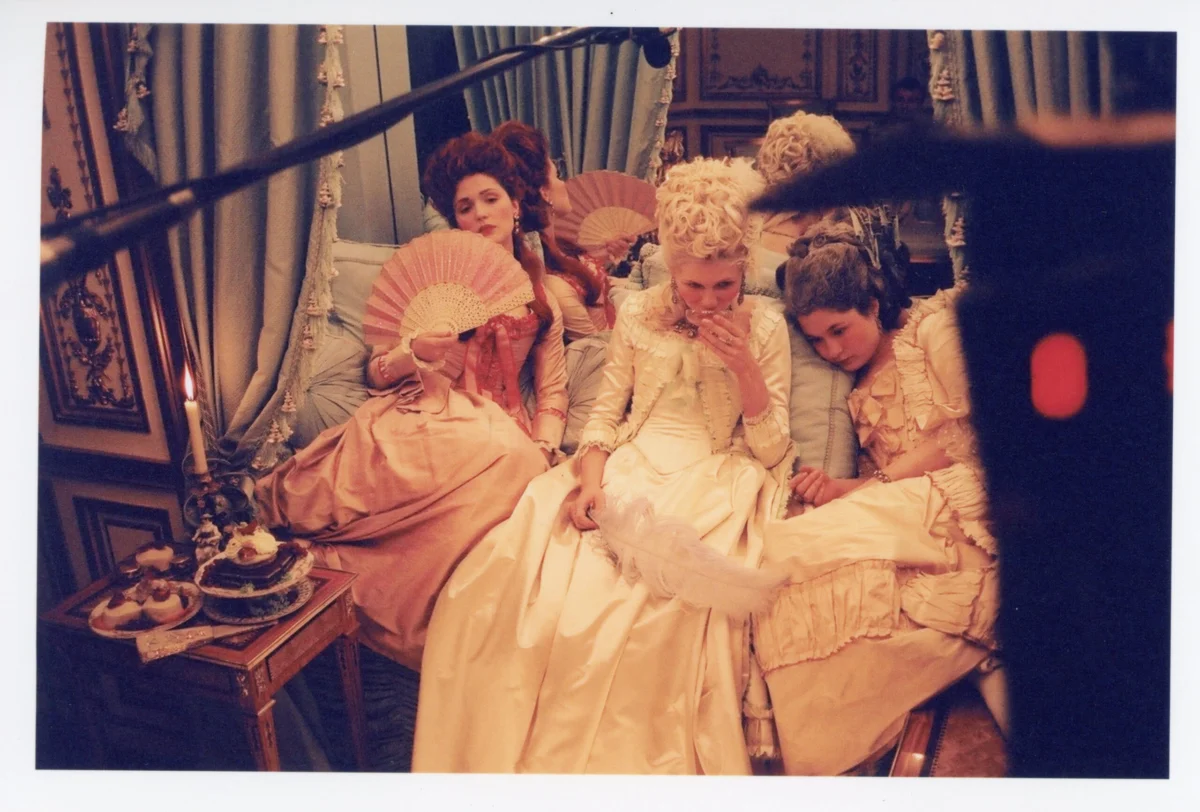
The cinematic world anticipates the release of Making Marie Antoinette, a poignant and meticulously crafted documentary offering an intimate look into the genesis of Sofia Coppola’s visually sumptuous 2006 period drama. This new film, a posthumous work from the acclaimed documentarian, artist, and director Eleanor Coppola, arrives as a significant cultural artifact, not only chronicling the complex production of Marie Antoinette but also serving as a final testament to Eleanor’s unique artistic vision and her profound legacy as a chronicler of her family’s monumental creative endeavors. Scheduled for theatrical release on October 23 and subsequent streaming on Mubi from November 6, the documentary offers a privileged vantage point, twenty years after the original film’s debut, into the challenges and triumphs of bringing a revolutionary historical epic to the screen.
Eleanor Coppola’s Enduring Legacy as a Chronicler of Creation
Eleanor Coppola, who passed away in April 2024 at the age of 87, carved out a distinct and invaluable niche in filmmaking history. While widely known as the wife of legendary director Francis Ford Coppola and mother to directors Sofia and Roman Coppola, her contributions extended far beyond her familial connections. An artist, photographer, and filmmaker in her own right, Eleanor possessed an unparalleled talent for capturing the raw, often tumultuous, processes of artistic creation from a uniquely observational and empathetic perspective. Her most celebrated work, Hearts of Darkness: A Filmmaker’s Apocalypse (1991), remains a benchmark in documentary filmmaking. Co-directed with Fax Bahr and George Hickenlooper, this seminal film meticulously documented her husband Francis Ford Coppola’s harrowing and nearly catastrophic production of Apocalypse Now, revealing the immense physical and emotional toll it exacted on all involved. The film garnered critical acclaim, including a Directors Guild of America Award for Outstanding Directorial Achievement in Documentary, solidifying Eleanor’s reputation for insightful, behind-the-scenes storytelling.
Beyond Hearts of Darkness, Eleanor Coppola consistently turned her lens on her family’s creative pursuits, offering a rare, insider’s view. Her projects included chronicling her son Roman Coppola’s 2001 comedy-drama CQ and her daughter Sofia Coppola’s much-lauded 1999 feature debut, The Virgin Suicides. These works, often characterized by their candidness and intimate access, provided invaluable context to the finished films, exploring the meticulous planning, unforeseen challenges, and personal sacrifices inherent in the filmmaking process. Making Marie Antoinette thus fits seamlessly into this distinguished oeuvre, providing a final, poignant chapter to her lifelong dedication to documenting the artistic journeys of her beloved family.
The Genesis of "Marie Antoinette" and Its Cultural Impact
Sofia Coppola’s Marie Antoinette, released in 2006, was a bold and audacious cinematic reinterpretation of the life of France’s infamous queen consort, starring Kirsten Dunst in the titular role. The film, celebrated for its anachronistic soundtrack, candy-colored aesthetics, and focus on the inner world of a young queen thrust into an opulent yet suffocating court, aimed to humanize a figure often vilified by history. Shot on location at the Palace of Versailles, the production itself was an ambitious undertaking, requiring intricate costume design, elaborate set decoration, and precise choreography to recreate the lavish 18th-century French aristocracy through a distinctly modern lens.
Upon its initial release, Marie Antoinette polarized critics and audiences alike. Its unconventional approach, blending historical period drama with contemporary sensibilities, led to a mixed reception. Famously, it was booed at its premiere at the Cannes Film Festival, an event that highlighted the film’s divisive nature. However, over the past two decades, Marie Antoinette has undergone a significant critical re-evaluation, emerging as a cult classic and a pivotal work in the evolution of period drama. Its distinctive visual language, narrative style, and feminist undertones are now widely recognized as groundbreaking. The film’s influence can be distinctly observed in subsequent successful period productions, from the vibrant, modern sensibilities of Netflix’s Bridgerton and Hulu’s The Great, to the darkly comedic and historically playful The Favourite, and even the romantic grandeur of Wuthering Heights. These contemporary works often echo Coppola’s willingness to inject modern relevance and stylistic innovation into historical narratives, demonstrating Marie Antoinette‘s profound and lasting impact on the genre.
A Unique Documentary: The Making of "Making Marie Antoinette"

The journey of Making Marie Antoinette itself is a testament to the enduring bond between Eleanor and Sofia Coppola. The documentary’s origins trace back to 2005, during the principal photography of Marie Antoinette. Eleanor Coppola was present on set, meticulously capturing over 80 hours of candid footage. These raw recordings remained largely untouched for approximately 15 years. The narrative picks up during the early days of the COVID-19 pandemic, a period when Eleanor and Sofia found themselves in a shared "COVID bubble." This unique circumstance provided the impetus to revisit the extensive archives. Eleanor, with her unparalleled eye for detail and narrative construction, began the arduous process of stitching together the footage. Following her passing in 2024, it was Sofia Coppola who took on the deeply personal task of ensuring her mother’s final film was completed and brought to the public. This collaborative, intergenerational effort, culminating in a posthumous release, imbues Making Marie Antoinette with an added layer of emotional resonance and historical significance.
Behind the Velvet Curtains: An Intimate Production Portrait
Unlike the dramatic and often harrowing narrative of Hearts of Darkness, which depicted a descent into creative madness, Making Marie Antoinette presents a quieter, more focused portrait. It centers on the intricate minutiae of filmmaking, designed particularly for the ardent admirers of Sofia Coppola’s work and the original Marie Antoinette. The documentary meticulously dissects the creative process, from the logistical challenges of filming in a historic location like Versailles to the countless costume changes, the intricacies of set decoration, and the delicate art of choreography required to bring the 18th-century court to life.
While the film may not offer groundbreaking revelations for those who have exhaustively scoured the internet for backstage anecdotes and images, its value lies in its immersive quality. It invites viewers into the unique world of the set, revealing charming and often humorous juxtapositions: the sight of Ugg boots peeking out from beneath opulent ballgowns, extras in powdered wigs snatching moments of sleep between takes during grueling 11-hour production days, and Jason Schwartzman, in character as Louis XVI, spontaneously playing the piano while department heads engage in serious discussions around him. These glimpses humanize the grand spectacle, providing an authentic sense of the controlled chaos inherent in large-scale film production.
Several moments within the documentary stand out as particularly precious, offering "gold dust" insights into the personal connections that shaped the film. One memorable scene captures Sofia introducing her then-new boyfriend (now husband), Phoenix frontman Thomas Mars, to her mother, Eleanor, who is behind the camera. Mars and his bandmates were on set to make cameos as court musicians at the Petit Trianon, adding another layer of personal connection to the production. In another candid moment, Asia Argento, adorned in the flamboyant finery of Madame du Barry, engages in palmistry with her co-stars during a break. When Sofia asks for a reading, Argento presciently tells the director she will have two children—a prediction that came true with the births of Romy and Cosima Mars in 2006 and 2010, respectively. These moments, captured with Eleanor’s characteristic discretion, provide a rare and touching window into the personal lives intersecting with the professional demands of filmmaking.
Sofia Coppola’s Evolution: A Director Coming into Her Own
At its heart, Making Marie Antoinette serves as a compelling character study of Sofia Coppola, charting her evolution as a filmmaker. When the documentary begins, Sofia, then 34 years old, appears shy and softly spoken. Early footage shows her attempting to rally her crew, her voice sometimes barely audible above the clamor of her colleagues. However, the rigorous demands of directing an epic period piece necessitated a gradual transformation. Day by day, she was confronted with myriad decisions: insisting on specific costume changes, ordering additional extras, and advocating for subtle artistic choices she deeply believed in. While always maintaining her polite demeanor, the documentary clearly illustrates her quiet but resolute ascent into her power as a director.
This evolution is powerfully crystallized in a sequence depicting the filming of the Parisian masked ball scene, where Kirsten Dunst’s vivacious Marie Antoinette first encounters Jamie Dornan’s dashing Count Fersen. After Sofia successfully captures the initial spark from Marie’s perspective, her male colleagues press for an additional shot from Fersen’s viewpoint, arguing it would be necessary for narrative coherence. Sofia, however, gently but firmly pushes back. "This isn’t about his point of view," she asserts, "it’s about Marie’s." Despite initial confusion and further deliberation, Sofia ultimately prevails. Watching this slight figure, sometimes appearing uncertain and self-doubting, navigating a giant, predominantly male crew while steadfastly realizing her singular vision, is a testament to her quiet strength and unwavering artistic integrity. It is a powerful illustration of a female director asserting her unique "gaze" within a traditionally male-dominated industry.
A Symbiotic Relationship: Director, Star, and Documentarian

The documentary also shines a spotlight on the profound connection between Sofia Coppola and Kirsten Dunst, who was only 22 at the time of filming. Their collaborative history, established during The Virgin Suicides, had fostered a seemingly cosmic, often unspoken understanding—a "young-woman shorthand" that is joyous to witness. Dunst, though initially shy and giggly when observed by Eleanor’s keenly perceptive camera, transforms into a preternaturally poised actress the moment Sofia calls "action." A particularly heartwarming moment shows Sofia directing Dunst for Marie’s 18th birthday party scene. Sofia conveys her vision by simply saying, "You know when girls see their friends at a party and they’re like…" and then lets out a girlish scream. Dunst understands perfectly, executing the performance with precision. This playful, intuitive interaction underscores the rarity and value of seeing women collaborate on art with such evident camaraderie and enjoyment.
Eleanor Coppola herself emerges as another compelling "star" of the documentary. Her role as a documentarian is a delicate balance between impassive observation and strategic intervention. At one point, observing Sofia coughing persistently through a day of filming, Eleanor discreetly calls for a doctor without her daughter’s knowledge. It is revealed that Sofia has bronchitis and requires antibiotics, highlighting Eleanor’s maternal concern interwoven with her professional detachment. While Sofia generally displays loving and generous interactions with her mother on set, there are also moments of relatable exasperation, a common dynamic between parents and adult children. Towards the end of the demanding production, when Eleanor attempts to ask a sleep-deprived Sofia more questions about the film, Sofia grimaces, half-jokingly groaning, "Maybe I should rest, so I can come onto set fresh and not having done a press junket in my trailer with my mom." These candid exchanges provide a humanizing, often humorous, layer to the intense creative environment.
The Poignancy of Narration: Eleanor’s Voice and Inner World
In Making Marie Antoinette, Eleanor’s own voice is heard in portions of the film, but significant sections are narrated by legendary actor Diane Lane, who reads from Eleanor Coppola’s personal journals written during the 2005 production. This decision, which could have felt artificial or disjointed, is executed sparingly and seamlessly, adding profound emotional depth. Lane’s narration is most affecting when it delves into Eleanor’s more personal reflections. Her journal entries reveal her sorrow at feeling rejected by Sofia during her adolescence, a phase Eleanor understood as a necessary break for her daughter to forge her own identity. She recounts cherished memories of Sofia pretending to direct on the set of Apocalypse Now, a poignant foreshadowing of her future career. Perhaps most revealing are Eleanor’s lingering frustrations at having dedicated so much of her life to documenting the artistic endeavors of her family, sometimes at the expense of creating more of her own independent art. This self-reflection provides a touching, almost melancholic, dimension to the documentary, underscoring the personal cost and enduring love that shaped her unique artistic path.
A Love Letter to Female Filmmaking
While Marie Antoinette aficionados might desire more "juice"—perhaps tales of Rip Torn’s alleged diva antics as Louis XV, footage of Sofia and Kirsten partying in Paris, a detailed account of the film’s controversial Cannes premiere, or an explicit assessment of its reemergence as a cult classic—these elements are consciously omitted. Making Marie Antoinette is not designed as a sensational tell-all. Instead, it is a lo-fi, fly-on-the-wall, and at times meandering return to a magnificent, eye-popping universe. It functions as a deeply personal and multi-layered love letter to female filmmaking—a tribute from one female artist to another, mother to daughter.
The documentary stands as a unique cultural artifact, offering an unparalleled glimpse into the creative process through a distinctly feminine lens. It celebrates the quiet resilience, artistic integrity, and collaborative spirit that characterize the work of women in film. Given its intimate nature and the profound legacy it represents, Making Marie Antoinette is poised to be obsessed over and rewatched by fans and scholars alike, almost as much as the original film itself, cementing its place as an invaluable addition to the annals of cinematic history.
