
 By admin
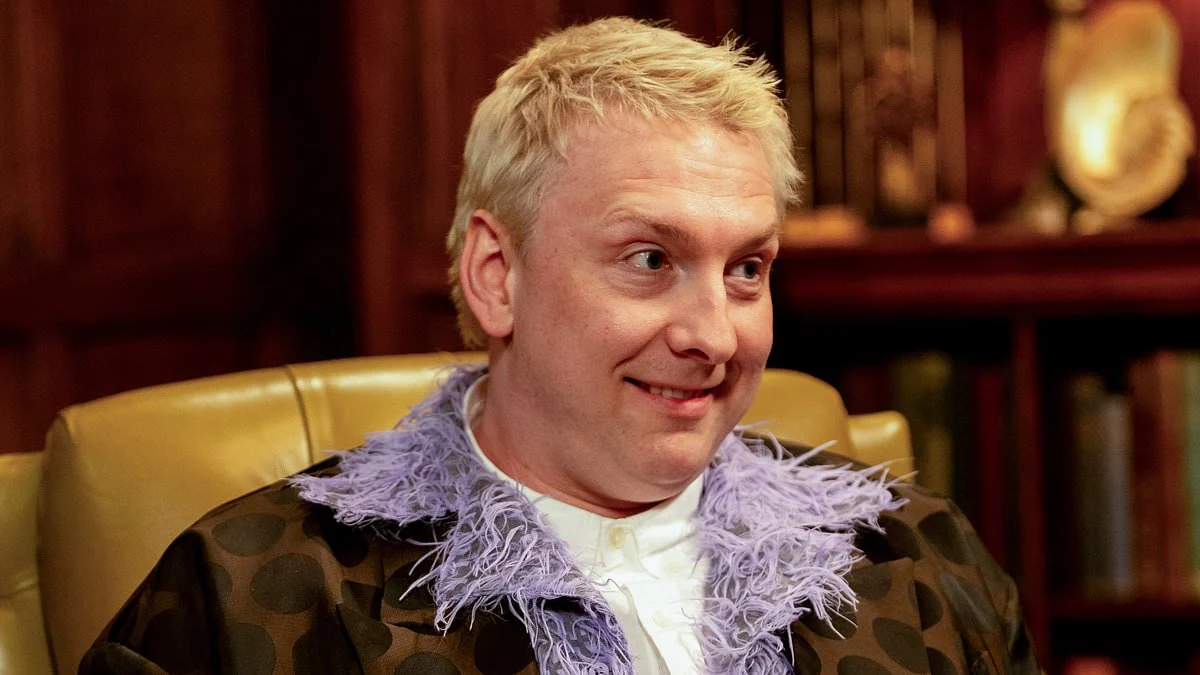
The landscape of strategic reality television shifted significantly on Friday night as comedian Joe Lycett was banished from the high-stakes competition of Celebrity Traitors. The 38-year-old entertainer, known for his satirical activism and sharp wit, saw his journey come to an end following a series of verbal missteps during the show’s pivotal Round Table segment. The elimination has sparked a wider conversation regarding the game’s mechanics, with Lycett himself proposing a radical alteration to the show’s established rulebook during a post-exit interview.
Lycett’s departure marks a critical turning point in the current season, which has seen a blend of high-profile personalities navigating the treacherous waters of social deduction. The comedian’s exit was not the result of a coordinated Traitor "murder," but rather a democratic banishment orchestrated by his fellow contestants, known as the Faithful. The vote was primarily catalyzed by a logical slip-up that led the group to believe Lycett had been recruited into the antagonistic Traitor faction.
The Circumstances of the Banishment
The atmosphere at the Round Table was charged with suspicion following the recent departure of Hannah Fry. In the episodes leading up to his banishment, Lycett had been uncharacteristically vocal about his desire to be "recruited" by the Traitors. In the game’s format, Traitors have the option to invite a Faithful to join their ranks, a move that often creates confusion and paranoia among the group. Lycett’s open campaigning for this role made him a person of interest, as many participants assumed his wish had been granted in secret.
During the debate, Lycett attempted to explain the strategic landscape but inadvertently used phrasing that implied insider knowledge. He suggested that if he were banished, it would force the Traitors to recruit again, thereby "denying them of murder" for the night. This technical observation was immediately seized upon by singer James Blunt, who noted that Lycett’s specific wording suggested he was thinking from the perspective of the Traitors rather than the Faithful.
The ensuing confusion proved insurmountable for Lycett. Despite his protests of innocence, a majority of the cast voted for his removal. In a rare display of emotional loyalty, comedian Miranda Hart refused to follow the group’s consensus, choosing instead to vote for Ross Kemp because she "physically couldn’t write" Lycett’s name down. Nevertheless, the majority prevailed, and Lycett was forced to reveal his true identity as a Faithful, much to the chagrin of the group who had just eliminated a valuable ally.
Proposed Rule Changes and Strategic Advice
Following his exit, Lycett appeared on the spin-off program, The Celebrity Traitors: Uncloaked, where he addressed the circumstances of his departure with his trademark humor. When asked for words of motivation for the remaining players, Lycett bypassed traditional encouragement in favor of a plea for a fundamental rule change. He suggested the implementation of a "reinstatement clause" that would allow banished Faithfuls to return if the Traitors specifically requested them as recruits.
"I’d like to motivate the Traitors to find an unknown clause in the contract that can bring back a Faithful that’s been banished to recruit because I’m there if they want me," Lycett remarked. While the comment was delivered in a comedic tone, it highlighted a recurring theme in the show’s history: the desire of participants to experience the game from the "dark side."
Beyond the humor, Lycett offered a serious critique of the current strategic trends among the Faithful. He warned against the dangers of "block voting," a phenomenon where contestants coalesce around a single target based on the loudest voices at the table rather than individual intuition. Lycett advised his former colleagues to "experiment with voting with their heart and their instincts, rather than following what happens at the Round Table," suggesting that a more decentralized approach might be more effective in identifying the actual Traitors.
Chronology of the Recruitment Phase
To understand the weight of Lycett’s banishment, it is necessary to examine the timeline of the most recent recruitment cycle:
- The Vacancy: Following the elimination of previous players, the Traitor faction, led by Maya Jama and James Acaster, was given the opportunity to expand their numbers.
- The Lobbying: Joe Lycett began a campaign of "reverse psychology," telling multiple players he hoped to be recruited. This was intended to make him appear too obvious to actually be a Traitor, but instead, it sowed seeds of distrust.
- The Decision: In the Traitors’ turret, Maya Jama and James Acaster deliberated on their choice. Despite Lycett’s availability and willingness, they ultimately chose to recruit King Kenny, viewing him as a more subtle addition to their team.
- The Breakfast Reveal: The following morning, the cast correctly deduced that a recruitment had taken place. Lycett’s immediate declaration of "It wasn’t me!" only served to heighten the existing tension.
- The Round Table: The suspicion culminated in the evening session where Lycett’s logical slip-up regarding "denying a murder" provided the "smoking gun" the Faithful felt they needed.
Supporting Data and Show Dynamics
The banishment of a Faithful is a statistically common occurrence in The Traitors franchise, yet it remains the primary obstacle to the Faithful winning the final prize. Historical data from various international versions of the show suggest that the Faithful are more likely to banish one of their own during the mid-game phase than they are to identify a Traitor.
In the UK’s civilian version, for instance, the success rate of banishing a Traitor in the first four rounds is approximately 30%, whereas the probability of a "block vote" occurring increases significantly after the first three days of competition. Lycett’s observation about block voting is supported by social psychology studies on groupthink, which show that in high-pressure environments, individuals are prone to suppressing dissenting opinions to maintain group harmony or to avoid becoming a target themselves.
The recruitment of King Kenny over Joe Lycett also follows a documented trend where Traitors prefer to recruit "under-the-radar" players rather than "big personalities." By choosing Kenny, Jama and Acaster effectively used Lycett as a lightning rod, allowing the suspicion to fall on a vocal player while their new recruit remained shielded from scrutiny.
Official Responses and Implications
While the production team of The Celebrity Traitors has not officially commented on Lycett’s proposed rule change, the suggestion has resonated with the show’s fan base on social media. The "Lycett Clause" has become a trending topic, with viewers debating whether a "Redemption Island" style mechanic—common in shows like Survivor—could work within the Traitors’ format.
Industry analysts suggest that Lycett’s exit may actually boost the show’s ratings due to the dramatic nature of his "slip-up" and the subsequent reveal of his innocence. "Joe Lycett is a master of the ‘calculated error,’" noted one media consultant. "Whether his slip-up was genuine or a result of over-thinking the game, it provided the kind of narrative friction that keeps audiences engaged."
The impact on the remaining Faithful is expected to be profound. With a trusted, albeit eccentric, ally gone, the group must now reckon with the fact that their instincts were wrong. The focus is likely to shift toward those who led the charge against Lycett, specifically James Blunt, whose interrogation was the catalyst for the vote.
Broader Impact on the Genre
The celebrity iteration of The Traitors continues to perform strongly for the network, drawing in millions of viewers and dominating the cultural conversation. The inclusion of figures like Lycett, Miranda Hart, and Ross Kemp has elevated the stakes, as viewers are treated to seeing established public figures navigate a game rooted in deception and paranoia.
Lycett’s departure highlights the unique difficulty of the "Celebrity" format. Unlike civilian players who are motivated primarily by the prize fund, celebrity players often contend with the maintenance of their public persona. Lycett’s willingness to be the "villain" (a Traitor) was a departure from the usual desire to be seen as the "hero" (a Faithful), a nuance that his fellow players seemingly could not reconcile.
As the series progresses, the remaining contestants face an increasingly difficult task. The Traitors are now a reinforced unit with the addition of King Kenny, and the Faithful have lost one of their most analytical, if misunderstood, members. The "Lycett legacy" in the game will likely be his final piece of advice: to stop voting in blocks and start trusting individual intuition. Whether the remaining Faithful will heed this warning or continue to fall into the traps set by the Traitors remains the central question of the season.
