
 By admin
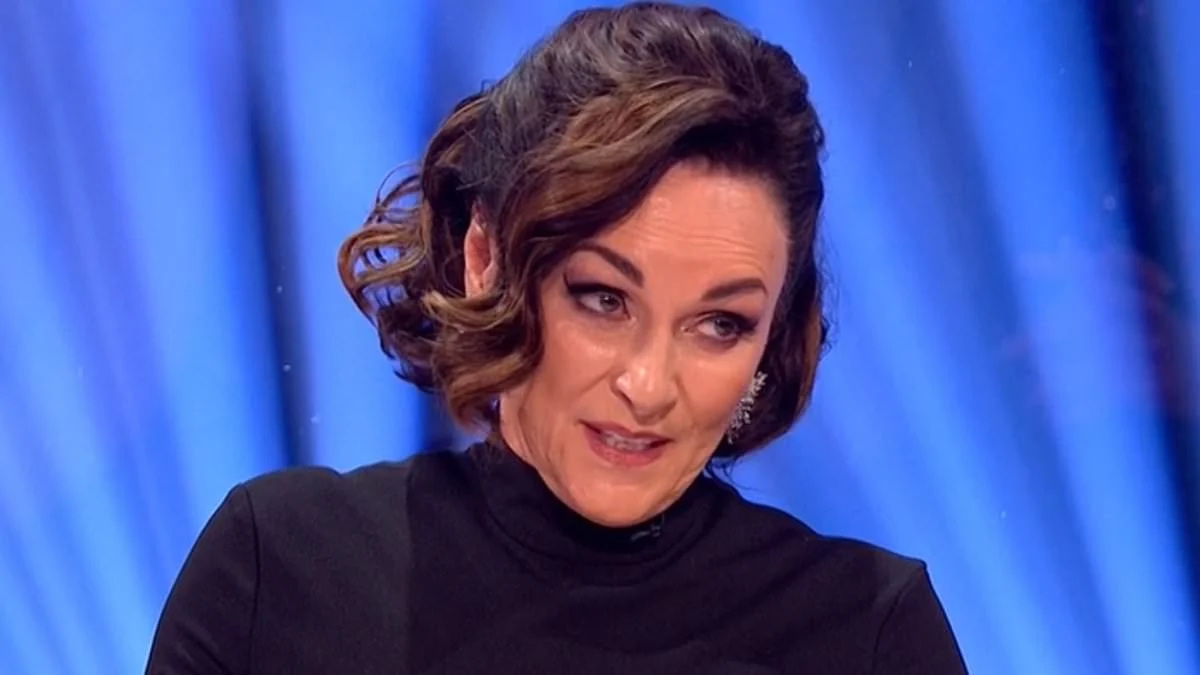
The third week of the 2026 season of Strictly Come Dancing delivered a significant shift in the competition’s internal dynamics as the judging panel experienced uncharacteristic friction. During Saturday night’s live broadcast, the professional relationship between head judge Shirley Ballas and the notoriously critical Craig Revel Horwood reached a point of public contention. The disagreement centered on Ballas’s increasingly stringent technical requirements, which led Revel Horwood to label his colleague a "fun sponge" following a series of low scores that polarized both the live audience and the viewing public at home. While the program is traditionally characterized by a supportive, if demanding, atmosphere, the tension during the Week 3 performances highlighted a growing divide in the panel’s philosophy regarding technical precision versus performance value.
The Judicial Divide: Technicality Versus Artistry
Historically, Craig Revel Horwood has occupied the role of the "villain" on the BBC’s flagship dance program, known for his acerbic wit and reluctance to award high marks in the early stages of the competition. However, as the 2026 series progressed into its third week, viewers noted a role reversal. Shirley Ballas, the "Queen of Latin," appeared to adopt a significantly more rigorous stance, particularly regarding footwork and traditional ballroom mechanics. This shift resulted in a chorus of boos from the studio audience and a surge of critical commentary on social media platforms.
The primary flashpoint occurred following the performance of Emmerdale actor Lawrence Robb and his professional partner Jowita Przystał. The pair performed a Rumba, a dance often cited as the most difficult for male celebrities due to its requirement for fluid hip movement and emotional vulnerability. Ballas, whose expertise in the Rumba is internationally recognized, offered a critique that many deemed disproportionately severe. Describing the routine as "flat-footed" and "not my cup of tea," she expressed dissatisfaction with what she perceived as excessive "standing around."
In a rare move, the other three judges stood in opposition to the head judge. Anton Du Beke, often the most lenient of the panel, explicitly stated his appreciation for the style of the Rumba, while Revel Horwood defended Robb’s "great storytelling." The tension was further punctuated by Motsi Mabuse, who attempted to diffuse the atmosphere with humor, likening her position between the two bickering judges to that of a child mediating a parental divorce.
Scoring Disparities and the Lawrence Robb Controversy
The quantitative impact of the judges’ disagreement was most evident in the final tally for Lawrence Robb. While Du Beke awarded a six and both Mabuse and Revel Horwood provided fives, Ballas opted for a four. This resulted in a total of 20 points, placing Robb in a precarious three-way tie for seventh place on the leaderboard.
Public reaction to the scoring was swift. On X (formerly Twitter), fans argued that Ballas was unfairly penalizing the celebrity for choreographic choices made by the professional partner. Analysis of the performance suggests that while Robb may have lacked the "snake-like" hip action Ballas demands, his frame and timing were consistent with a Week 3 standard. The discrepancy between the "fun sponge" critique and the more encouraging feedback from Revel Horwood—who is usually the first to point out technical flaws—suggests a strategic or philosophical pivot within the panel that could influence the remainder of the season.
Tabby Stoecker and the Argentine Tango Debate
The controversy extended to the final dance of the evening, an Argentine Tango performed by Olympic skeleton champion Tabby Stoecker and her partner Mark Karmalita. Dancing to "Hate That I Made You Love Me," the pair delivered a performance that appeared to captivate the room, earning a standing ovation from the studio audience. Mabuse described the routine as "goosebumps"-inducing and labeled Stoecker a "dark horse" for the Glitterball Trophy.
Despite the universal acclaim from her peers, Ballas remained reserved. While she acknowledged the dance was "unbelievable," her score of seven was lower than the eights awarded by the other three judges, including the usually stingy Revel Horwood. This "undermarking" became a focal point of post-show analysis, with viewers suggesting that Ballas’s critiques were leaning more toward personal preference in choreography rather than the technical execution of the celebrity. Stoecker’s total of 31 placed her in joint second, but the missing point from the head judge prevented her from putting additional pressure on the top of the leaderboard.
Leaderboard Analysis: Delta Goodrem’s Dominance
Amidst the judicial drama, Delta Goodrem emerged as the clear frontrunner of the series. Following a successful performance in Week 2, Goodrem and her partner Kai Widdrington took to the floor with a Salsa set to a medley of "Always There" and "Ain’t Nobody." The routine was characterized by high-energy lifts and complex rhythmic sequences that showcased Goodrem’s musicality.
The judges were unanimous in their praise. Revel Horwood described the performance as "a-may-zing," while Mabuse highlighted the "disco" energy of the piece. The pair received a total of 33 points, the highest score of the 2026 series to date. This performance solidifies Goodrem’s position as the contestant to beat, demonstrating a level of professional polish that currently exceeds the rest of the field.
The Week 3 leaderboard reflects a highly competitive middle tier:
- First Place: Delta Goodrem and Kai Widdrington (33)
- Joint Second Place: Cach Mercer and Maddie Ingoldsby; Tabby Stoecker and Mark Karmalita (31)
- Fourth Place: Jaime Winstone and Carlos Gu (28)
- Joint Fifth Place: Dani Dyer and Nikita Kuzmin; Bethany Antonia and Nancy Xu (27)
- Seventh Place: Lacey Turner and Vito Coppola (26)
- Joint Eighth Place: Graeme Hall and Lauren Oakley; Will Best and Dianne Buswell (25)
- Joint Tenth Place: Dame Sarah Storey and Julian Caillon; John Nellis and Katya Jones; Lawrence Robb and Jowita Przystał (20)
- Thirteenth Place: Melanie Walters and Aljaž Škorjanec (17)
- Fourteenth Place: Shaun Wright-Phillips and Alexis Warr (15)
At the bottom of the table, former footballer Shaun Wright-Phillips finds himself in significant danger. His score of 15 suggests a struggle to adapt to the technical rigors of the ballroom, placing him as the most likely candidate for the Sunday night dance-off unless saved by a substantial public vote.
Biographical Context of the 2026 Contestants
The 2026 cast represents a diverse cross-section of British and international talent, contributing to the high stakes of the current season. Lacey Turner, 38, known for her long-running role as Stacey Slater on EastEnders, has been a consistent performer, though she currently sits in the middle of the pack.
The inclusion of high-profile athletes like Dame Sarah Storey, Britain’s most successful Paralympian, and Olympic champion Tabby Stoecker, has introduced a level of discipline and competitive drive often seen in the show’s most successful seasons. Meanwhile, the presence of influencers like Cach Mercer (Love Island 2025) and John Nellis ensures a strong engagement with younger demographics and social media audiences.
The diverse backgrounds—ranging from House of the Dragon actress Bethany Antonia to Gavin & Stacey star Melanie Walters—have created a season where the "journey" narrative is particularly prominent. However, as the scoring becomes more polarized, the ability of these celebrities to maintain morale under harsh critique will be a determining factor in their longevity.
Implications for the Competition and Future Shows
The conflict between the judges serves as more than mere television drama; it has tangible implications for the contestants’ trajectories. When a head judge "undermarks" a popular celebrity, it often triggers a "sympathy vote" from the public, which can paradoxically protect lower-scoring contestants from the dance-off. Conversely, it can demoralize performers who feel that technical perfection is an unattainable goal.
The BBC has confirmed that the upcoming Sunday results show will feature a themed group dance titled "Ballroom v Latin." This performance will see the professional dancers divided into two teams, led by Anton Du Beke and Shirley Ballas, respectively. With Craig Revel Horwood acting as the referee, the program appears to be leaning into the established rivalry between the judges to drive narrative interest.
As the series moves into Week 4, the pressure on the celebrities to satisfy Ballas’s technical requirements will likely intensify. The "fun sponge" comment from Revel Horwood may have been intended as a lighthearted jab, but it underscores a fundamental tension in the show’s identity: the balance between being a rigorous dance competition and a prime-time entertainment spectacle.
The results of the Week 3 public vote and the subsequent dance-off will be broadcast on Sunday at 7:10 pm on BBC One. This episode will determine which celebrity becomes the next to leave the ballroom, and whether the judicial rift continues to influence the scores as the field narrows. For Lawrence Robb and Tabby Stoecker, the outcome of the public vote will be a crucial indicator of whether the audience aligns with the head judge’s technical scrutiny or the more performance-oriented views of the rest of the panel.
