
 By admin
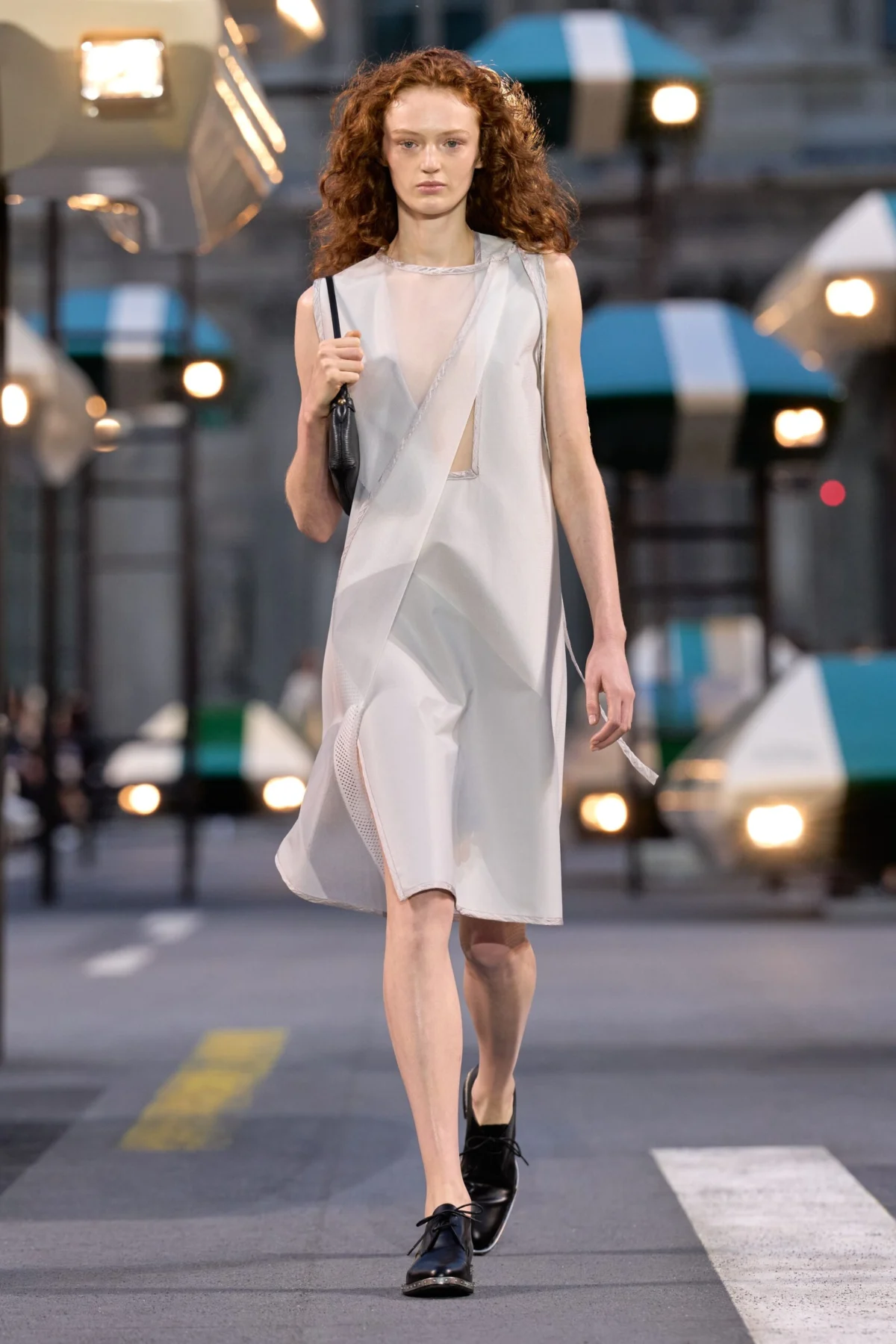
The historic Cour Carrée of the Louvre Museum, a venerable symbol of French heritage, was dramatically transformed into a futuristic airfield for Louis Vuitton’s Spring 2027 presentation. Flying cars, complete with glowing red taillights and signature Damier check paint jobs, hovered majestically above the assembled fashion elite or executed simulated landings on the ersatz macadam runway. This dazzling, space-age spectacle, reminiscent of The Jetsons, initially suggested a journey into a distant future. However, beneath the high-tech facade, Nicolas Ghesquière, Louis Vuitton’s acclaimed artistic director for women’s collections, presented a vision decidedly more grounded and intimately connected to the human form, emphasizing an "ergonomic," body-first approach to fashion that marks a significant departure from his recent maximalist tendencies.
A New Direction for a Visionary Designer
Ghesquière’s latest collection for Spring 2027 represents a striking pivot in his design philosophy, moving away from the grand, often architectural silhouettes and anachronistic references that have characterized much of his recent work. His previous seasons have showcased diverse inspirations, from the voluminous traditional shepherd’s cloaks of recent collections to the Dune-esque robes of Resort 2023, and earlier still, the eclectic mix of 1980s party girl aesthetics and 18th-century panniered frocks. This consistent embrace of "out-of-time" references and larger-than-life forms established Ghesquière as a master of avant-garde conceptualization, often challenging conventional notions of wearability. The current shift towards an "ergonomic" and "body-first" paradigm, therefore, is not merely an evolution but a profound reorientation, signaling a conscious decision to anchor his creative expression in a more intimate relationship with the wearer.
The collection commenced with a starkly simple sleeveless white shift dress paired with classic black men’s oxfords, immediately setting a tone of deliberate restraint. Ghesquière articulated his intent, stating, "I wanted to express a sensation of simplicity, a feeling of purity. It’s an impression of minimalism, but the work behind this construction, the simplification, making things extremely light, is really complex." This statement underscores the deceptive nature of the collection’s apparent ease; true minimalism in design often demands intricate technical mastery and a deep understanding of fabric and form to achieve a seamless, effortless result.
Subsequent ensembles echoed this theme of understated sophistication. Collarless jackets and straight-leg pants exuded an unadorned efficiency, almost uniform-like in their clean lines and practical appeal. Floatier elements emerged in summer dresses crafted from lettuce-edged layers of chiffon, which offered movement and lightness without sacrificing refinement. Checked pantsuits, remarkably light and fluid, moved with a grace typically associated with more delicate "flou" garments, further demonstrating Ghesquière’s commitment to both comfort and elegance. The meticulous construction behind these seemingly simple pieces speaks volumes about the technical prowess of the Louis Vuitton ateliers, ensuring that each garment, despite its streamlined appearance, carries the hallmark of luxury craftsmanship.
Ghesquière’s Illustrious Career and Recent Accolades
This pivotal collection arrives at a significant juncture in Nicolas Ghesquière’s career. Just last week, he was bestowed with France’s highest honor, the Legion d’Honneur, by President Emmanuel Macron at a ceremony held at the Élysée Palace. This prestigious recognition not only celebrates his profound contributions to French fashion but also acknowledges his status as a cultural ambassador for the nation’s creative industries. During the ceremony, President Macron light-heartedly quipped to Ghesquière, "It just occurred to me that you were the second man in her life. I’m not quite sure how to take that," eliciting laughter and highlighting the designer’s close professional relationship with France’s First Lady, Brigitte Macron, whom he has dressed since her husband’s initial election campaign. This long-standing association with the First Lady has further cemented Ghesquière’s public profile and his role in shaping the image of modern French elegance on the global stage.
Ghesquière’s journey to the helm of Louis Vuitton in 2013 followed a highly influential 15-year tenure at Balenciaga, where he revitalized the sleeping couture house with his futuristic, often architectural designs. It was two decades ago, in a memorable show for Balenciaga, that he famously debuted his C3PO leggings, a testament to his early embrace of technology and science fiction as sources of inspiration. His work at Balenciaga, characterized by sharp tailoring, innovative fabric manipulation, and a distinctive blend of historical and futuristic elements, garnered critical acclaim and established him as one of the most innovative designers of his generation. His move to Louis Vuitton, a brand with a vast global presence and a heritage deeply rooted in travel and luxury goods, presented a different challenge: to imbue the commercial powerhouse with a distinct high-fashion identity while maintaining its market relevance.
Responding to a Shifting Industry Landscape
Ghesquière indicated that these new design instincts, leaning towards simplicity and a "body-first" approach, were partly a response to the "chaos of the world around us." This sentiment resonates deeply within the broader fashion industry, which has undergone what many refer to as a "great reset." The last few years have witnessed profound transformations, driven by global events, evolving consumer values, and the accelerated pace of digital communication. This reset has ushered in a new generation of creative directors across numerous luxury houses, many of whom, whether due to market pressures or a genuine belief that "grounded, unstudied clothes just look right right now," are delivering more customer-oriented, relatable collections.
The shift towards wearability and practicality is a palpable trend across the luxury sector. Consumers, increasingly discerning and conscious of value, are seeking garments that integrate seamlessly into their daily lives while still embodying exceptional quality and design. This movement challenges the traditional notion of haute couture as purely aspirational and often impractical art. Instead, there is a growing demand for luxury that is both beautiful and functional, adaptable to various contexts, from professional engagements to leisure activities. For a brand of Louis Vuitton’s immense scale and commercial imperative, with annual revenues estimated in the tens of billions for its parent company LVMH, aligning creative vision with market demands is a critical balancing act. This collection suggests Ghesquière is keenly attuned to this evolving landscape, seeking to fuse his artistic integrity with the pragmatic requirements of a global luxury brand.
Historical Resonance and Future Implications
The idea of a "wearable Ghesquière" holds particular resonance for those who followed his early career. During his Balenciaga days, fashion critics and enthusiasts, including this observer’s cohort, often "rhapsodized about his perfect pants." These were garments celebrated for their impeccable cut, innovative materials, and ability to flatter the wearer while pushing sartorial boundaries. The prospect of "wearable Ghesquière" in 2026, therefore, carries a nostalgic yet forward-looking appeal, suggesting a return to a core strength that defined his early success.
Among the standout pieces that exemplify this new direction were a pair of embellished hammered satin elongated tanks, featuring extended trains, paired with fluid pants. These ensembles were immediately identified as contenders for the best evening looks of the season, showcasing a sophisticated blend of relaxed elegance and subtle opulence. The combination of luxurious fabric, thoughtful embellishment, and an unrestrictive silhouette speaks directly to the collection’s "ergonomic" ethos, providing glamour without sacrificing comfort or ease of movement. This particular aesthetic demonstrates how Ghesquière can translate his signature innovation into a more approachable, yet still highly desirable, form of luxury.
This collection’s focus on essential garments, simplified forms, and a body-first approach could have significant implications for Louis Vuitton’s market strategy. By offering pieces that are inherently more relatable and versatile, Ghesquière could broaden the brand’s appeal to a wider demographic, particularly those who appreciate high fashion but prioritize comfort and practicality in their everyday wardrobes. It also signals a potential shift in how Louis Vuitton positions itself within the competitive luxury landscape, emphasizing a quiet confidence and enduring elegance over overt trend-driven statements.
For Ghesquière himself, this strategic recalibration underscores his adaptability and artistic maturity. It demonstrates a willingness to evolve his creative vision in response to both internal reflections and external pressures, solidifying his reputation not just as an innovator but also as a designer capable of delivering commercially successful collections without compromising his unique artistic voice. The Spring 2027 collection for Louis Vuitton, therefore, is more than just a presentation of new clothes; it is a thoughtful declaration from one of fashion’s most influential figures, charting a new course for luxury that is both deeply considered and eminently wearable. The industry will undoubtedly be watching closely to see how this "ergonomic" philosophy continues to unfold and reshape the future of Louis Vuitton and beyond.
